
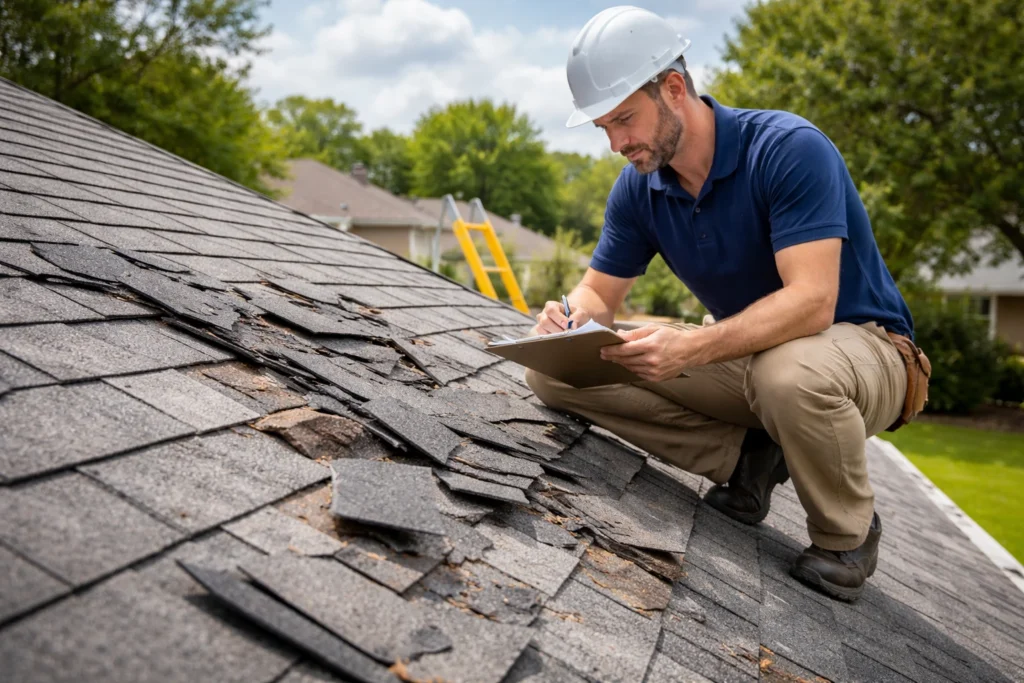
Storms move fast in San Marcos. One minute it’s humid and still. The next, hail is hammering your shingles and wind is ripping through neighborhoods near Blanco River and Wonder World Drive. And when the sky clears, what you’re left with isn’t just debris in the yard — it’s uncertainty. That’s exactly when a roof damage public adjuster becomes critical.
Because roof claims aren’t simple. They look simple. They aren’t.
You may see a few missing shingles. Your insurer may see “minor cosmetic damage.” But what’s actually happening under the surface — compromised underlayment, fractured matting, moisture intrusion — can turn into a five-figure problem if it’s not properly documented from day one.
Let’s break this down clearly. No fluff. Just what San Marcos homeowners need to know.
Roof Damage in San Marcos Isn’t Hypothetical
Central Texas weather is volatile. Hailstorms roll in from nowhere. Straight-line winds exceed 60 mph. Heavy rain overwhelms drainage systems.
Here are the most common roof damage triggers locally:
1. Hailstorms
Hail doesn’t have to be baseball-sized to cause trouble. Even one-inch hail can bruise asphalt shingles, cracking the fiberglass mat beneath the surface. It may not leak immediately. But it weakens the system.
2. Wind Damage
Wind lifts shingles. It breaks seals. It creates creases that compromise integrity. Once that seal is broken, water finds a way in.
3. Flash Rain Events
San Marcos gets intense bursts of rain. When drainage is overwhelmed, water backs up. That’s when roof penetrations become entry points.
4. Fallen Trees and Debris
Even smaller limbs can fracture decking. Structural damage isn’t always visible from the ground.
5. Insurance Disputes Over “Wear and Tear”
This one is big. Insurers frequently attribute roof issues to age rather than storm impact. That distinction determines whether your claim is approved — or denied.
And this is exactly where a roof damage public adjuster changes the game.
What Your Insurance Company Is Actually Looking For
Insurance companies don’t just ask, “Is there damage?” They ask:
- Was the damage caused by a covered event?
- When did it happen?
- Is it sudden or gradual?
- Does it qualify for full replacement or repair?
They examine your roof slope by slope. They assess granule loss patterns. And they look for directional impact marks. It’s technical. It’s detailed.
Here’s the key difference:
| Insurance Company Adjuster | Roof Damage Public Adjuster |
| Represents the insurance company | Represents you |
| Focused on limiting payout | Focused on maximizing your rightful recovery |
| Evaluates based on insurer guidelines | Evaluates based on policyholder advocacy |
| Paid by insurance carrier | Paid from settlement |
An insurance adjuster is not your adversary. But they are not your advocate either.
A roof damage public adjuster is.
What Is a Roof Damage Public Adjuster?
A public adjuster is a licensed professional in Texas who represents policyholders during insurance claims. When it comes to roofing specifically, a roof damage public adjuster specializes in documenting, valuing, and negotiating roof-related losses.
Here’s what that means in practice:
- Conducts independent inspections
- Uses drone photography and detailed slope documentation
- Prepares line-item repair estimates
- Reviews your policy for coverage details
- Handles communication with the insurance carrier
- Negotiates settlement terms
They do not work for roofing contractors. They do not work for insurers.
And they work for you.
When Should You Hire a Roof Damage Public Adjuster?
Not every claim needs one. But many do.
Here are situations where bringing in a roof damage public adjuster makes financial sense:
- Your claim was denied
- You received a low settlement offer
- The insurer approved only partial repairs
- Your roof requires full replacement
- The carrier claims the damage is “old”
- You have a high-value property
- You have a percentage-based deductible
If your roof replacement estimate is $18,000 and your insurer offers $6,500? That’s not a small gap. That’s a negotiation issue.
How a Roof Damage Public Adjuster Handles Your Claim
Let’s walk through the process step by step.
Step 1: Comprehensive Inspection
This is not a quick glance. It’s systematic.
- Drone imaging
- Close-up impact analysis
- Moisture detection
- Interior inspection for secondary damage
Photos are time-stamped. Slopes are labeled. Damage is mapped.
Documentation wins claims.
Step 2: Detailed Estimating
Public adjusters use professional estimating software to calculate:
- Shingle removal and replacement
- Underlayment
- Flashing
- Drip edge
- Ridge caps
- Code upgrades
San Marcos homes must meet local building codes. That matters. Code-required upgrades often increase claim value significantly.
Step 3: Policy Review
Policies vary.
Replacement Cost Value (RCV) vs. Actual Cash Value (ACV) can drastically affect payout. Deductibles — especially 1–2% wind/hail deductibles — can be substantial.
A roof damage public adjuster reads your policy closely. They look for endorsements and overlooked provisions.
Step 4: Claim Filing or Reopening
If your claim was underpaid, supplements can be filed. If it was denied improperly, documentation can justify reconsideration.
Step 5: Negotiation
This is where expertise matters.
Adjusters challenge:
- Line-item pricing
- Labor rates
- Material matching
- Scope completeness
Negotiation is strategic. It’s data-driven. And it often increases settlements.
Why Roof Claims Are Frequently Underpaid in Texas
Let’s be direct. Roof claims are one of the most disputed types of property claims in Texas.
Common underpayment tactics include:
- Depreciation applied aggressively
- Partial replacement approvals instead of full replacement
- Denial of code upgrades
- Labeling impact as “cosmetic”
- Disputing storm dates
And here’s the truth: if you don’t challenge the scope, the initial estimate often stands.
That’s why experienced homeowners in San Marcos bring in a roof damage public adjuster early.
What Roof Damage Actually Costs in San Marcos
Roofing isn’t cheap. Especially not now.
Here’s a rough breakdown:
| Roof Type | Estimated Replacement Cost (2,000 sq ft) |
| Asphalt Shingle | $12,000 – $20,000 |
| Metal Roof | $18,000 – $35,000 |
| Tile Roof | $25,000 – $45,000 |
Factors that affect cost:
- Roof pitch
- Number of penetrations
- Local labor rates
- Material type
- Code compliance upgrades
Insurance estimates often miss line items. A roof damage public adjuster ensures those items are included.
The Risk of Handling It Alone
I’ve seen homeowners try to “just work it out” directly with their insurer. Sometimes it works. Often, it doesn’t.
Here’s what can go wrong:
- Missing the statute of limitations
- Failing to document interior damage
- Accepting first settlement offer
- Not requesting supplements
- Misunderstanding depreciation
Insurance claims are procedural. One missed detail can cost thousands.
And once you sign a release? That’s usually final.
Choosing the Right Roof Damage Public Adjuster in San Marcos
Not all adjusters specialize in roofing. That matters.
Here’s a checklist:
- Verify active Texas license
- Ask how many roof claims they’ve handled
- Request examples of increased settlements
- Understand their fee structure (usually a percentage of recovery)
- Confirm local San Marcos experience
Local knowledge helps. Understanding storm patterns. Knowing how carriers evaluate Central Texas claims. It all adds up.
Is Hiring a Roof Damage Public Adjuster Worth It?
Let’s talk honestly about cost.
Public adjusters typically charge a percentage of the claim settlement. That means if there’s no recovery increase, their incentive disappears.
In many roof claims, adjusted settlements increase significantly — often covering their fee and leaving the homeowner with a stronger repair budget.
But this isn’t about inflating claims. It’s about accurate valuation.
You paid premiums. You deserve a fair assessment.
What Happens After Settlement?
Once the claim resolves:
- Funds are disbursed
- Depreciation may be recoverable after repairs
- Contractors complete work
- Final inspections ensure compliance
A good roof damage public adjuster remains involved through this phase to ensure funds align with scope.
Final Thoughts: Protect Your Roof. Protect Your Investment.
Your roof is your home’s first line of defense. It shields your structure. It protects your equity. And it preserves everything inside.
Storm damage isn’t just cosmetic. It’s structural. Financial. Emotional.
And while insurance companies are businesses with processes and guidelines, you are a homeowner with a stake in the outcome.
A roof damage public adjuster gives you representation. Clarity. Leverage.
If your San Marcos roof has been hit by hail, wind, or heavy rain, don’t assume the first estimate tells the full story. Get a second set of eyes. Get proper documentation. And get someone in your corner.
Because handling a roof claim alone might save you a phone call.
But it could cost you thousands.
And that’s a risk most homeowners shouldn’t take.
FAQs
A roof damage public adjuster inspects, documents, and negotiates your roof insurance claim to help ensure you receive a fair settlement.
Most work on a percentage of the final settlement, meaning they’re paid from the claim proceeds, not upfront.
Yes, a roof damage public adjuster can review the denial and submit additional documentation to request reconsideration.
In many cases, it actually speeds things up by ensuring paperwork and documentation are complete from the start.
They may coordinate with contractors for estimates, but they represent you—not the contractor or the insurance company.
For small repairs, it may not be necessary, but for full roof replacements or disputed claims, it often makes financial sense.
If damage was undervalued or missed, they can negotiate for a higher and more accurate payout.
A roof damage public adjuster can document storm-related impact evidence to challenge that determination.
Simple claims may resolve in weeks, while disputed or complex roof claims can take several months.
Fee structures vary, but most public adjusters are compensated only if they help secure a settlement.