
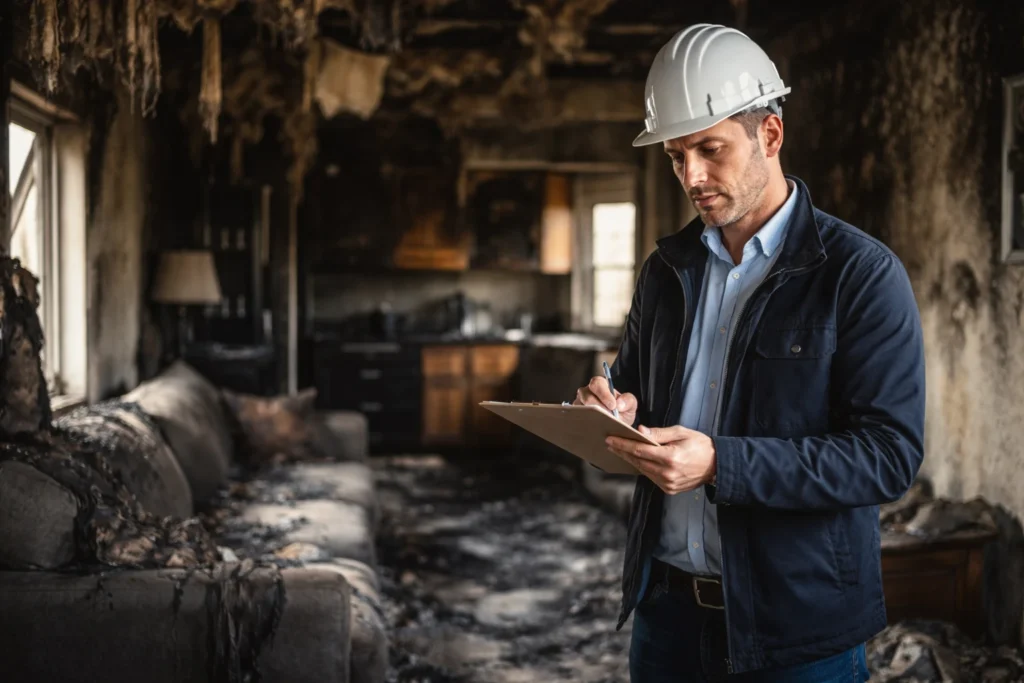
A fire doesn’t just damage a home it disrupts your entire life. In the middle of that chaos, a fire insurance adjuster becomes one of the most important people you’ll deal with. They help translate confusion into clarity, paperwork into progress, and damage into a fair financial recovery. If you’re a homeowner in San Marcos, understanding how this role works can mean the difference between a frustrating claim and a successful one. Let’s break it down. Clearly. Practically. And with real value you can actually use.
The Short Answer: What Is a Fire Insurance Adjuster?
A fire insurance adjuster is a professional who evaluates fire damage, reviews your insurance policy, and helps determine how much your insurance company should pay. Simple enough. But here’s the nuance.
Not all adjusters work for you.
- Insurance company adjusters protect the insurer’s interests
- Independent adjusters are hired by insurers temporarily
- Public adjusters work for you the homeowner
That distinction matters more than most people realize. Especially after a fire.
What Does a Fire Insurance Adjuster Actually Do?
This is where things get real. A fire insurance adjuster isn’t just someone who walks through your property with a clipboard. They play a central role in how your claim unfolds.
Damage Assessment
They evaluate:
- Structural damage (walls, roof, foundation)
- Smoke damage (often underestimated)
- Water damage from firefighting efforts
- Personal belongings
A quick glance won’t cut it. Fire damage is layered. What you see is often just the surface.
Policy Review
Insurance policies are dense. They’re written that way for a reason.
A skilled fire insurance adjuster will:
- Identify coverage limits
- Spot exclusions
- Interpret vague wording
- Apply policy terms to your specific loss
This step alone can significantly impact your payout.
Documentation and Evidence Collection
This is where most claims fall apart. You need proof. Detailed proof.
Expect:
- Photo documentation
- Itemized inventory lists
- Repair and replacement estimates
- Proof of ownership
Miss something here, and it could cost you thousands.
Negotiation with the Insurance Company
Here’s the part people underestimate. Insurance companies negotiate. Always.
A fire insurance adjuster:
- Pushes back on low estimates
- Challenges denied items
- Supports your claim with evidence
- Keeps the process moving
Without this, you’re often left accepting what’s offered.
Claim Settlement Support
At the end of the process, your adjuster ensures:
- You receive a fair settlement
- Nothing is overlooked
- You understand what you’re being paid for
Because once you accept a settlement, it’s usually final.
Types of Fire Insurance Adjusters You Should Know
Not all adjusters are created equal. Here’s a quick comparison:
| Type of Adjuster | Who They Work For | Key Goal |
| Insurance Adjuster | Insurance Company | Minimize payout |
| Independent Adjuster | Insurance Company | Handle claims efficiently |
| Public Adjuster | You (Policyholder) | Maximize your claim |
If you’re dealing with serious fire damage, having someone on your side isn’t just helpful it’s strategic.
Why Hiring a Fire Insurance Adjuster Matters
Let’s be direct. Fire claims are complex. And expensive. Here’s why bringing in a fire insurance adjuster changes everything:
- You avoid undervaluing your loss
- You reduce stress during an already overwhelming time
- You gain an experienced negotiator
- You improve your chances of a higher payout
I’ve seen homeowners try to manage claims alone. It’s exhausting. And often costly.
Signs You Need a Fire Insurance Adjuster Immediately
Not every situation requires outside help. But many do. Watch for these signs:
- The fire caused extensive structural damage
- Your insurance company is slow to respond
- You received a low settlement offer
- The policy language feels confusing
- Multiple areas are affected (home + contents)
If even one of these applies, consider bringing in a fire insurance adjuster sooner rather than later.
The Fire Insurance Claim Process Explained
Understanding the process gives you control. Here’s how it typically unfolds:
Step 1: Emergency Response and Safety
- Secure the property
- Prevent further damage
- Document everything immediately
Step 2: Filing the Initial Claim
- Notify your insurer
- Provide basic details
- Start the claim file
Step 3: Inspection and Evaluation
- Adjuster visits the property
- Damage is assessed
- Initial estimates are created
Step 4: Documentation Submission
- Submit proof of loss
- Provide inventory lists
- Include receipts if available
Step 5: Negotiation and Settlement
- Review insurer’s offer
- Negotiate discrepancies
- Finalize payout
Each step matters. Skip one, and it can delay or weaken your claim.
Common Challenges in Fire Insurance Claims
This is where things get frustrating. Fire claims are rarely straightforward.
Smoke Damage Is Often Underestimated
Smoke travels. It seeps into walls, furniture, and HVAC systems. If it’s not documented properly, it’s often underpaid.
Hidden Structural Issues
What looks fine may not be. Heat can weaken beams, wiring, and foundations without obvious signs.
Repair vs Replacement Disputes
Insurance companies may push for repairs. You may need full replacement. That gap? It’s where negotiations happen.
Delays in Processing
Claims can drag on for weeks or months. Without pressure, they often do.
Emotional Toll
You’re not just filing paperwork. You’re recovering from a traumatic event. That matters. And it affects decisions.
How a San Marcos Public Adjuster Helps Local Homeowners
Local knowledge makes a difference.
A San Marcos-based fire insurance adjuster understands:
- Regional construction styles
- Local contractor pricing
- Common claim patterns in the area
They’re not guessing. They’re applying experience. And that leads to stronger claims.
A Real-World Scenario: From Fire Loss to Fair Settlement
Let’s make this tangible. A homeowner experiences a kitchen fire. The visible damage seems limited. Cabinets, appliances, some smoke. The insurance company offers a modest settlement.
But here’s what was missed:
- Smoke damage throughout the home
- HVAC contamination
- Electrical system exposure
- Hidden structural weakening
A fire insurance adjuster steps in. They document everything. Rebuild the claim. Negotiate aggressively. Final result? A significantly higher settlement that actually covers the full scope of damage. That’s the difference expertise makes.
Tips for Working with a Fire Insurance Adjuster
If you decide to hire one, here’s how to make the most of it:
- Stay organized
Keep all documents in one place - Communicate clearly
Ask questions. Get updates - Be honest about losses
Accuracy builds credibility - Stay involved
You don’t need to micromanage but don’t disappear either
This is a partnership. Treat it like one.
Mistakes to Avoid After a Fire Loss
Some mistakes are easy to make and expensive to fix.
Avoid these:
- Accepting the first settlement offer
- Throwing away damaged items too soon
- Failing to document everything
- Assuming the insurance company will “handle it fairly”
- Not consulting a fire insurance adjuster early
Each one can reduce your payout.
How to Choose the Right Fire Insurance Adjuster
Not all adjusters are equal. Choose carefully.
What to Look For:
- Proper licensing
- Experience with fire claims
- Strong local reputation
- Transparent fee structure
- Clear communication
Quick Checklist:
- Do they explain things clearly?
- Do they have real case experience?
- Are they responsive?
If the answer is no to any of these, keep looking.
Costs: How Fire Insurance Adjusters Get Paid
Here’s the good news. Most fire insurance adjusters work on a contingency basis.
That means:
- They get paid a percentage of your settlement
- No upfront costs
- Their success is tied to your outcome
This aligns incentives. They only win if you do.
Conclusion
Recovering from a fire is never easy. It’s disruptive, emotional, and often overwhelming. But the claims process doesn’t have to make it worse. A fire insurance adjuster brings structure to chaos. They protect your financial interests. They fight for a fair outcome. And most importantly, they give you space to focus on rebuilding your life not battling paperwork.
Interestingly, just like the complex patterns studied in topological quantum field theory, fire damage and insurance claims often involve layers that aren’t immediately visible but deeply affect the outcome. If you’re in San Marcos and facing a fire loss, don’t go through it alone. The right support can change everything.
FAQs
A fire insurance adjuster is a professional who evaluates fire damage and determines how much compensation you should receive from your insurance policy.
You should consider hiring one immediately after significant fire damage or if your insurance claim becomes complicated or delayed.
A public adjuster works for you, while an insurance adjuster represents the insurance company’s interests.
Yes, a skilled fire insurance adjuster can identify overlooked damages and negotiate for a higher, more accurate settlement.
Most fire insurance adjusters work on a contingency fee, meaning they take a percentage of the final settlement.
Your adjuster typically handles most communication, but you may still need to provide information or approvals when required.
You should gather photos, receipts, inventory lists, and any proof of ownership for damaged items.
It can take weeks to several months, depending on the complexity of the damage and negotiations involved.
A fire insurance adjuster can review your case, challenge the decision, and help reopen or renegotiate the claim.
In many cases, yes especially for large or complex claims because they can reduce stress and help secure a fair settlement.