
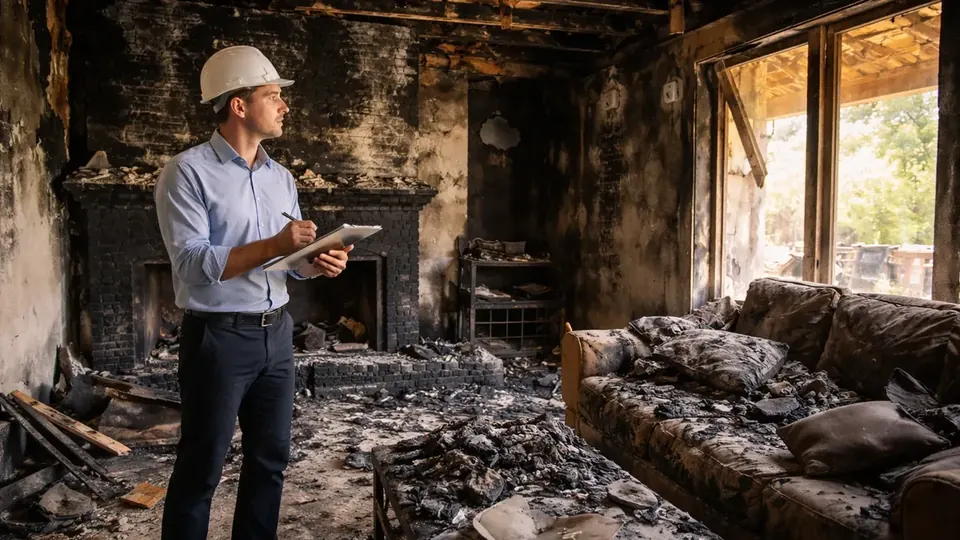
Smoke damage is one of the most underestimated parts of a property claim. The visible soot on a ceiling is only part of it. Fine particles settle inside cabinets and closets, cling to fabrics, work into attic insulation, and ride through the HVAC system into rooms far from the fire. Smoke damage insurance claims in San Marcos often come down to a single question: will the proposed cleaning actually remove the residue and odor, or does something need to be replaced? As a public adjuster serving San Marcos, TX, we help document smoke damage thoroughly enough to answer that question with evidence.
Where Smoke Damage Claims Come From
Not every smoke claim starts with a fire inside your own walls. Common sources include:
- A fire in your home or business, where smoke spreads to unburned rooms. Our fire damage claims page covers the structural side.
- Kitchen fires that are put out quickly but leave a sticky, strong-smelling film on cabinets, walls, and ceilings.
- Fires in an adjoining unit of an apartment, condo, townhome, or duplex. San Marcos has many multifamily and student rental properties near Texas State University, where shared walls and attics let smoke travel between units.
- Neighboring structure fires that push smoke into nearby homes or businesses.
- Electrical or appliance malfunctions that produce smoke without much open flame.
Types of Residue and Why They Matter
Different fuels leave different residues, and the cleaning method has to match. An estimate that prices the wrong approach may leave damage behind.
| Residue type | Typical source | Characteristics | Claim considerations |
|---|---|---|---|
| Dry soot | Fast-burning paper or wood | Powdery, smears when wiped wrong | Proper dry cleaning methods before wet cleaning |
| Wet or oily soot | Plastics, synthetics, rubber | Sticky, smeared, strong odor | More labor-intensive; porous items may not be restorable |
| Protein residue | Kitchen fires involving food | Nearly invisible film, very strong odor | Easy to underestimate because walls can look clean |
| Fine particulate in HVAC | Any fire with the system running | Dust at vents, dirty filters, odor when the system runs | Duct and air handler inspection and cleaning |
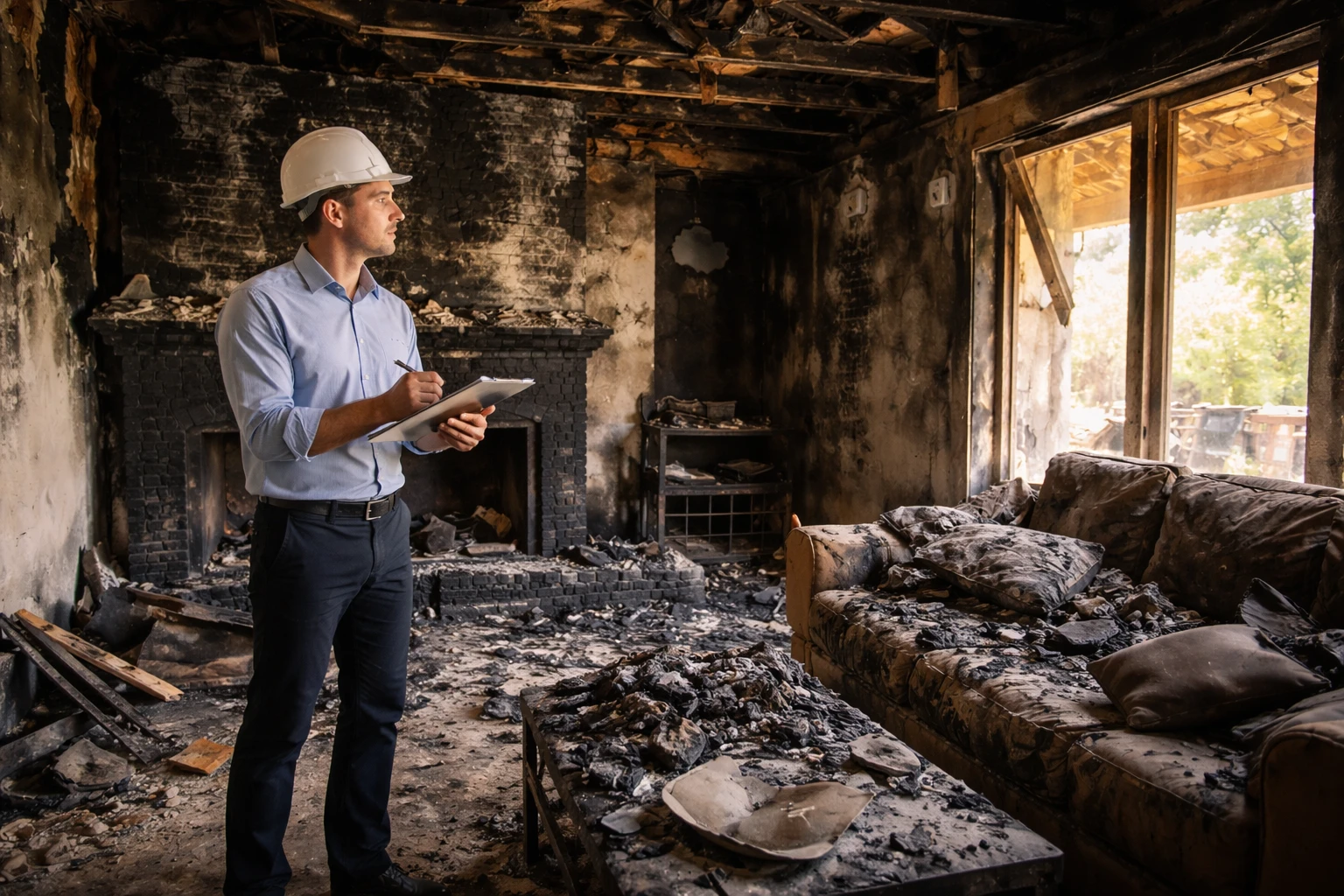
What We Review and Document
- Every room, not just the fire room: wipe tests, close-up photos of ceilings, walls, outlets, and the insides of cabinets and closets.
- The attic and insulation: discoloration or odor in insulation that may need removal rather than deodorizing.
- HVAC: filters, registers, ductwork, and the air handler.
- Finishes: paint, wall coverings, and flooring that may need sealing and refinishing for the odor to stay gone.
- Contents: clothing, bedding, upholstered furniture, electronics, and documents, sorted into cleanable and non-salvageable items.
- Living expenses: if strong odor or cleaning work makes the home unlivable for a time.
Common Disputes on Smoke Claims
Clean versus replace
Insurers often favor cleaning, which can be appropriate for hard, non-porous surfaces. Porous materials such as insulation, carpet pad, and some fabrics may hold odor even after cleaning. The disagreement is usually resolved by documentation, not opinion.
Limited scope
Estimates sometimes include only the room where the fire started. Smoke migration through hallways, return-air paths, and attics can affect much more of the building.
Painting and matching
Sealing and repainting affected walls and ceilings may require continuous surfaces to be painted so the finish matches.
Contents depreciation
Personal property paid at actual cash value is reduced for age and condition. Replacement-cost policies may pay the remainder after items are replaced; see our RCV versus ACV guide.
What to Do in the First Days After Smoke Exposure
Smoke residue can become harder to remove over time, so early steps matter:
- Photograph before cleaning. Take close-ups of ceilings, wall corners, light fixtures, vent covers, window blinds, and the insides of cabinets. Wipe a small area with a white cloth and photograph the result.
- Turn off the HVAC system if it is spreading odor, and photograph the filter before replacing it.
- Avoid scrubbing surfaces yourself. The wrong cleaning method can smear soot deeper into paint and porous materials, making restoration harder.
- Bag and set aside affected clothing and linens rather than washing them repeatedly at home before they are documented.
- Write down when odor is strongest. Notes about smell on hot or humid days, or when the AC runs, help show residue is still present.
- Report the claim and, if the fire was in a neighboring unit, note the date and location of that fire.
Our claim documentation checklist lists other records worth gathering. Renters and owners of units in shared buildings should also check whether the building’s own policy and their individual policy each have a role.
How the Process Works
- Free review of your situation and policy.
- If you hire us, a written, TDI-compliant agreement with a 72-hour right to rescind.
- Room-by-room inspection, residue documentation, and contents inventory.
- A detailed estimate for cleaning, sealing, replacement, and HVAC work, submitted to the insurer.
- Follow-up, including re-inspection requests if odor returns after cleaning.
If an insurer’s estimate already exists, our insurance estimate review compares it with what we documented.
Why Smoke Claims Are Easy to Underpay
Smoke damage rarely looks dramatic in photos, and that is part of the problem. A room that appears clean in a quick walk-through may still have a film on every surface and odor trapped in drywall, insulation, and fabric. Estimates written from a short visit tend to price light cleaning and a coat of paint. A thorough scope, supported by wipe samples, filter photos, and notes about recurring odor, gives the insurer a clearer picture of the work required to restore the property, not just to make it look clean for a while.
When to Call a San Marcos Public Adjuster
It may be time to call when the smell keeps coming back, when only one room was scoped, when contents were dismissed as cleanable without testing, or when a smoke claim was denied. Landlords and owners of multifamily properties can also see our commercial property claims page, and denied claims are covered on denied insurance claims. Request a free claim review to talk it through.
Frequently Asked Questions
Is smoke damage covered if the fire was next door?
Many property policies cover smoke damage from a sudden fire even when the fire was on a neighboring property or in another unit of the same building. Coverage depends on the policy wording, so report it and document the residue and odor promptly.
The insurer says cleaning will fix it. What if the smell keeps coming back?
Odor that returns after cleaning, especially on humid days, can mean residue remains in porous materials, insulation, or ductwork. Document the recurrence with dates and notes, and ask for the cleaning contractor’s report. Further cleaning, sealing, or replacement may be appropriate depending on the findings.
Do I need my air ducts cleaned after smoke damage?
If the HVAC system was running during or after the fire, smoke and soot may have moved through the ducts and air handler. An inspection of the system and filters helps show whether duct cleaning, component replacement, or both should be part of the scope.
Are smoke-damaged clothes and furniture covered?
Personal property coverage usually applies. Some items can be professionally cleaned; others, such as porous materials that cannot be restored, may need replacement. A detailed contents list with photos supports either outcome.
How long do I have to report smoke damage?
Policies require prompt notice. Report as soon as you notice residue or odor, and keep a record of when you first saw it. Delay can make it harder to connect the damage to a specific fire.
What does it cost to have a public adjuster review a smoke claim?
The initial claim review is free. If you hire us, fees are disclosed in a written contract before any work begins; Texas law caps public adjuster compensation at 10% of the insurance settlement.