
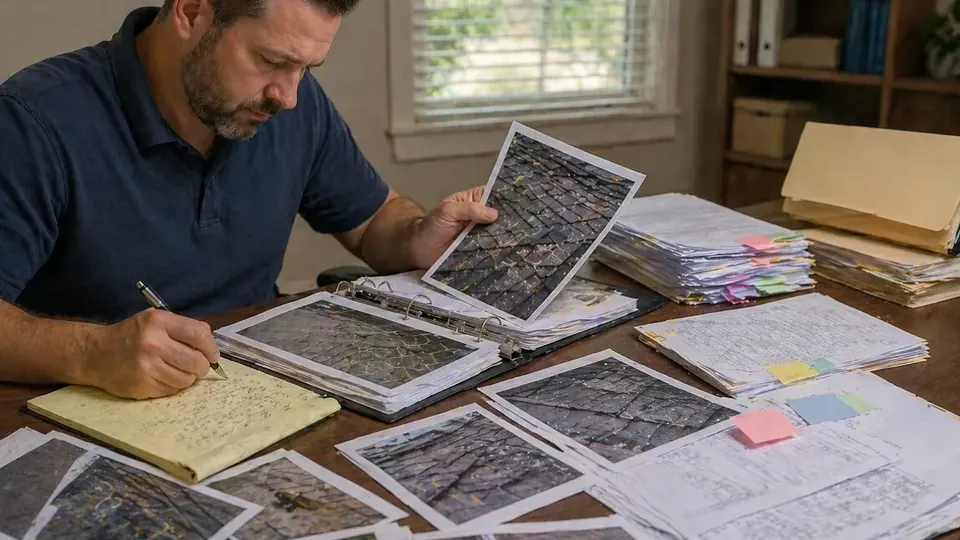
A claim that drags on for months costs more than patience. Roofs stay tarped, drywall stays open, and businesses lose revenue. A delayed insurance claim in San Marcos usually stalls for identifiable reasons: a backlog after a big storm, an adjuster reassignment, a document request nobody answered, or an investigation that never seems to finish. As a San Marcos public adjuster, we help property owners figure out where the claim is stuck, what the insurer still needs, and what Texas timelines generally apply.
Why Claims Get Delayed
| Cause of delay | What it looks like | What may help |
|---|---|---|
| Storm backlog | Inspections scheduled weeks out after a widespread hail or wind event | Thorough photos and mitigation receipts submitted early |
| Adjuster turnover | New adjuster asks for information you already provided | A written log of every submission with dates |
| Open document requests | Insurer waits on proof of loss, receipts, or a recorded statement | Written confirmation of exactly what is outstanding |
| Engineer or expert review | Weeks pass waiting on a report | Ask when the report is expected and request a copy |
| Coverage questions | A reservation of rights letter or long silence | Policy review; attorney consult if coverage is in question |
| Scope disagreement | Back-and-forth over estimates with no decision | A detailed line-item estimate that addresses each difference |
San Marcos and Hays County see bursts of claims after major spring storms. NOAA's records for May 9, 2024, for example, include 3-inch hail west of San Marcos and 70 mph gusts that downed trees in the city, and the Hays County Judge signed a local disaster declaration afterward. When thousands of policyholders report at once, response times often slip. Our article on why property insurance claims are delayed in Texas goes deeper into these patterns.
Texas Prompt Payment Timelines
The Texas Prompt Payment of Claims Act, in Insurance Code Chapter 542, Subchapter B, sets general deadlines for most property insurers:
| Stage | General timeframe |
|---|---|
| Acknowledge the claim, begin investigating, request information | Within 15 days after notice of the claim |
| Accept or reject the claim | Within 15 business days after receiving all requested items |
| Extension if the insurer needs more time | Insurer must notify you; then up to 45 additional days |
| Pay after accepting | Within 5 business days after notifying you of acceptance |
| After a declared weather catastrophe | Deadlines generally extended by 15 days |
These are general rules. Eligible surplus lines insurers follow different timeframes, and the clock for a decision usually starts only after the insurer receives everything it reasonably requested. That is why keeping track of requests and responses matters so much. Public adjusters do not give legal advice; questions about what a missed deadline means for your rights belong with a Texas attorney.
Keeping a Claim Moving
Most stalled claims start moving again when the file is complete and every open question has a written answer. Practical steps:
- Put everything in writing. Follow phone calls with a short email summarizing what was said.
- Keep a claim log. Date, person, what was requested, what you sent, and when.
- Ask what is outstanding. Request a written list of anything the insurer still needs to make a decision.
- Request reports. Ask for copies of inspection reports, photos, and any engineer's findings.
- Protect the property. Continue reasonable mitigation and keep receipts; further damage from waiting can complicate the claim.
- Use the right channel. If the adjuster is unresponsive, ask for a supervisor. The Texas Department of Insurance accepts consumer complaints.
Our claim documentation checklist lists the records insurers ask for most often.

Reservation of Rights Letters
Sometimes a delay is accompanied by a letter saying the insurer is investigating "under a reservation of rights." That letter generally means the insurer is continuing to look at the claim while preserving its ability to deny all or part of it later based on policy terms. It is not a denial, but it is a signal that coverage is in question. Read the policy provisions it cites, respond to reasonable information requests promptly, and consider consulting a Texas attorney, especially if the letter mentions misrepresentation, late notice, or an exclusion that could defeat the whole claim.
Recorded Statements and Examinations
Insurers may ask for a recorded statement, a sworn proof of loss, or, under some policies, an examination under oath. These requests can add weeks to a claim. Ask what the request is for, prepare by reviewing your timeline and documents, and answer accurately. If you are asked to give an examination under oath, it is wise to talk with a Texas attorney first.
How a San Marcos Public Adjuster Helps With a Delayed Claim
- File review. We review the correspondence, the policy, and what has been submitted to identify gaps.
- Complete documentation. We inspect and document the damage and prepare a line-item estimate so the insurer has what it needs to evaluate the loss.
- Single point of contact. We communicate with the adjuster in writing, track requests, and follow up on deadlines.
- Escalation when appropriate. If the file is complete and the claim is still stalled, we help you decide on next steps, including supervisor review or a TDI complaint.
Delays often hide other problems. Once a decision arrives, the claim may be partly denied or underpaid, and an independent estimate review can help you understand the numbers.
Delays After Floods and Freezes
Not every delay follows a hailstorm. After Winter Storm Uri in February 2021, which brought 7 inches of snow west of San Marcos and widespread burst pipes, plumbers, water mitigation companies, and adjusters were all stretched thin at the same time. Flood claims add another layer: they are usually handled under a separate NFIP or private flood policy with its own proof-of-loss deadlines, apart from your homeowners claim. If you have two claims open for the same event, track each separately. See freeze damage claims and flood damage claims.
Serving San Marcos and Hays County
We work with homeowners, landlords, and businesses throughout San Marcos, Kyle, Buda, Wimberley, and surrounding Central Texas communities. Fees are disclosed in a written contract before any work begins; Texas law caps public adjuster compensation at 10% of the insurance settlement. We cannot guarantee how quickly an insurer will act or what it will pay. If your claim has been sitting too long, a licensed San Marcos public adjuster can look at the file with you. Start with a Free Claim Review.
Frequently Asked Questions
How long does an insurer have to decide my claim in Texas?
Generally, an insurer has 15 days after notice to acknowledge the claim, start its investigation, and request information. After it receives everything it asked for, it generally has 15 business days to accept or reject, or it can tell you it needs more time and then has up to 45 more days. Payment is generally due within 5 business days after acceptance. Deadlines can be extended after a declared weather catastrophe, and some insurers follow different rules.
Why does the insurer keep asking for the same documents?
Sometimes files change hands and documents are not passed along. Sometimes the request is for something slightly different. Send items in writing, keep a log of what you sent and when, and ask the adjuster to confirm in writing what is still outstanding.
My adjuster changed three times. Is that normal?
After large storms it is common for claims to be reassigned between field adjusters, desk adjusters, and catastrophe teams. Each handoff can slow things down. Ask for the name and contact information of the person currently responsible for decisions on your claim.
Can I file a complaint with the Texas Department of Insurance?
Yes. TDI accepts consumer complaints about insurers, and its website explains the process. A complaint does not decide your claim, but it asks the insurer to respond to TDI about how the claim is being handled.
Should I make repairs while I wait?
You should take reasonable steps to protect the property from further damage and keep receipts. Before major permanent repairs, make sure the damage is thoroughly documented with photos and measurements, and tell the insurer what you plan to do.
When should I involve an attorney?
If the delay is long, you are approaching a deadline to file suit, or you believe the insurer is acting in bad faith, consult a Texas attorney. Weather-related claims also have pre-suit notice requirements under Texas law that an attorney can explain.