
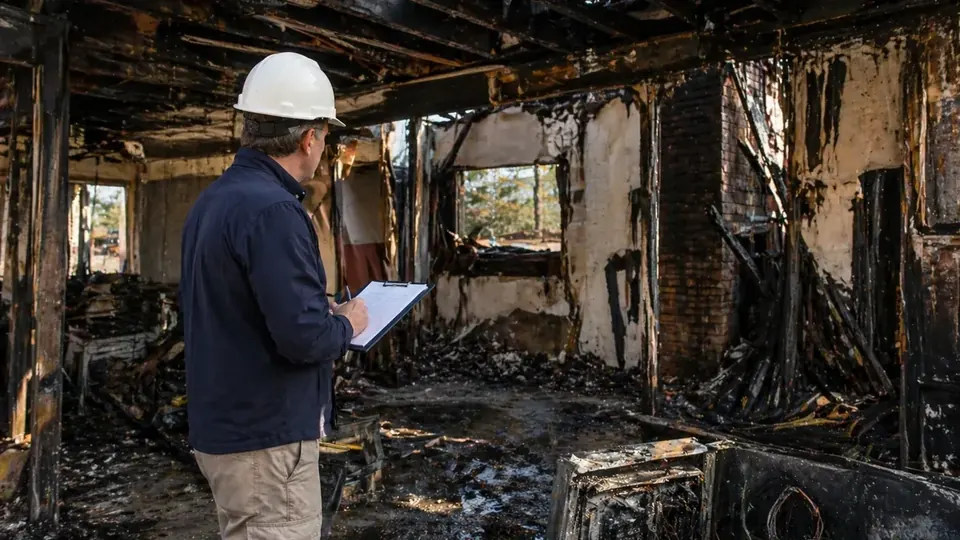
A fire damages far more than what burned. Heat warps materials in rooms the flames never reached, smoke travels through ductwork and wall cavities, and the water used to put the fire out soaks floors and drywall. Fire damage insurance claims in San Marcos usually involve several coverages at once, including the dwelling, other structures, personal property, debris removal, and living expenses, each with its own limit and rules. As a San Marcos public adjuster, we help homeowners and business owners in Hays County organize all of it so nothing is left behind.
The Coverages Involved in a Fire Claim
Your declarations page lists each coverage and its limit. In a fire, most of them can come into play:
| Coverage | What it typically pays for | What to watch |
|---|---|---|
| Dwelling (Coverage A) | Repairing or rebuilding the house | Full scope of structural, electrical, and finish work |
| Other structures (Coverage B) | Detached garages, fences, sheds, barns | Often overlooked when the main house is the focus |
| Personal property (Coverage C) | Furniture, clothing, electronics, tools | Itemized inventory and depreciation |
| Loss of use (Coverage D) | Additional living expenses while displaced | Time limits and documentation of increased costs |
| Debris removal | Demolition and hauling of burned materials | May be inside or on top of the dwelling limit |
| Ordinance or law | Increased costs to meet current code | Often a separate, limited coverage |
| Business income (commercial) | Lost income during restoration | Requires financial records and a clear period of restoration |
What We Review and Document
A fire file grows quickly. We try to build it in an order that supports the claim from the start:
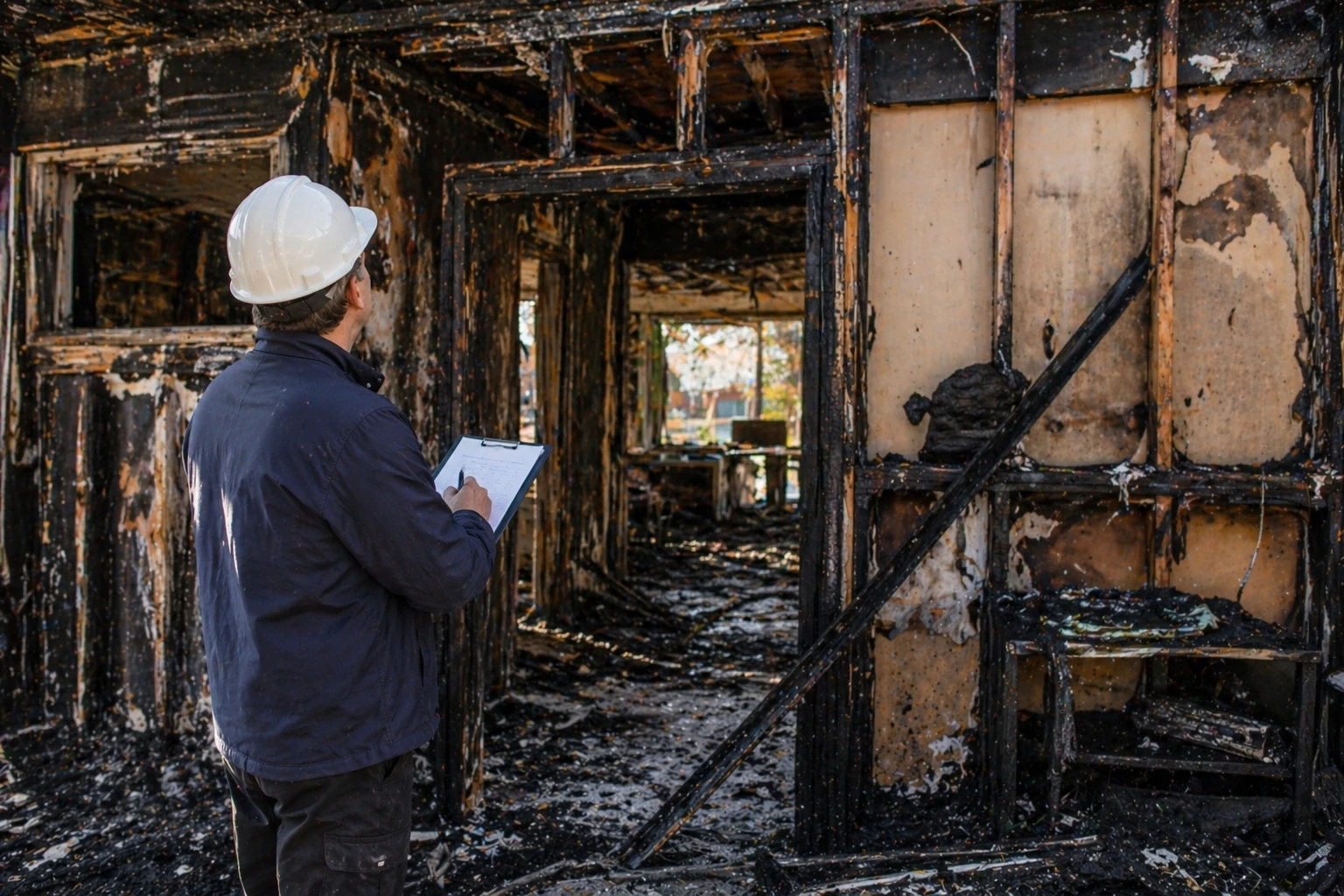
- Structure: framing, roof structure, sheathing, insulation, wiring, plumbing, HVAC equipment and ductwork, windows, doors, and finishes, including rooms with heat and smoke damage but no flames.
- Water from firefighting: saturated flooring, subfloors, and drywall that need drying or replacement.
- Contents: room-by-room inventory with photographs, descriptions, ages, and replacement prices, separating items that can be cleaned from those that cannot.
- Living expenses: lodging, meals above normal cost, mileage, and other increased costs while displaced.
- Code and engineering: current code requirements that affect the rebuild and whether ordinance or law coverage applies.
We prepare a full rebuild estimate in Xactimate and compare it with the insurer’s. For smoke-related cleaning and odor issues in unburned areas, see our smoke damage claims page.
San Marcos Codes and the Rebuild
The City of San Marcos has enforced the 2021 International Codes, including the IRC, IBC, IECC, and IFC, along with the 2020 National Electrical Code, since April 1, 2023 under Ordinance 2023-09. A local amendment requires that all foundations be designed by a licensed engineer who submits a sealed letter, which can matter when a fire damages a slab or requires a new foundation. Permits run through the city Permit Center.
Outside city limits, Hays County does not issue residential building permits, though it applies the 2018 International Fire Code to new commercial and multifamily buildings. Kyle, Buda, Wimberley, and other nearby cities have their own permit offices. Code requirements do not automatically mean the insurer pays for upgrades; that depends on ordinance or law coverage. Our local building codes page and codes and insurance repairs article go deeper.
Common Problems on Fire Claims
- Clean-versus-replace disputes for drywall, framing, and contents exposed to heat and smoke.
- Underestimated contents because the inventory was rushed or incomplete.
- Depreciation on contents and building materials under actual cash value terms. See our RCV versus ACV guide.
- Living expense cutoffs before the home is actually ready.
- Missed systems like ductwork, electrical runs, and appliances that look intact but were exposed.
Building a Contents Inventory That Holds Up
For many households, the personal property list is the hardest part of a fire claim. A practical way to approach it:
- Go room by room. Start with one room and list everything in it, including closets, drawers, and cabinets.
- Use what you already have. Phone photos, social media pictures, holiday videos, bank and credit card statements, and online order histories can help you reconstruct what you owned and when you bought it.
- Record the basics for each item: description, brand or model where known, quantity, approximate age, and a current replacement price.
- Do not discard items early. Keep damaged property until it has been photographed and the insurer has had a chance to see it, unless it is a safety hazard.
- Separate cleanable from non-salvageable. Restoration companies can often clean hard goods and some textiles; items that cannot be restored go on the replacement list.
A complete, organized inventory tends to move faster and draws fewer follow-up questions than a partial one. It also makes depreciation easier to review line by line.
How the Fire Claim Process Works With Us
- A free consultation to understand the loss and review your policy.
- A written agreement, with fees disclosed and a 72-hour right to rescind.
- Detailed inspection and documentation of the structure, systems, and contents.
- Estimates, inventories, and living-expense summaries submitted to the insurer.
- Ongoing negotiation and follow-up, including supplements when more damage is uncovered during demolition.
Our article After the Flames walks through the first weeks after a fire in more detail.
Additional Living Expenses: Keeping the Paper Trail
Loss of use coverage generally pays the increase in your living costs, not your normal expenses. If your family now pays for a rental house, extra mileage to school and work, laundry, or meals out because the kitchen is gone, those increases may be claimable. Keep receipts in one place, write down your normal monthly costs for comparison, and ask the insurer in writing how long the coverage period is expected to last so you are not surprised by a cutoff while repairs are still underway.
When to Call a Public Adjuster After a Fire
The earlier the better, because early documentation shapes the whole claim. A public adjuster in San Marcos can be especially helpful when the loss is large, when you are displaced and overwhelmed, when contents are extensive, or when the insurer’s estimate does not match contractor pricing. Business owners can also see our commercial property claims page. Request a free claim review when you are ready.
Frequently Asked Questions
What should I do first after a house fire?
Make sure everyone is safe, follow the fire department’s instructions about entering the property, notify your insurer, and secure the building against weather and trespass. Keep receipts for board-up, fencing, lodging, and essentials. Avoid throwing away damaged items until they are documented.
Will my policy pay for a hotel or rental while my home is repaired?
Many homeowners policies include additional living expense or loss of use coverage, which can pay increased living costs while the home is unlivable, up to the policy limit and time period. Business policies may include business income coverage. Keep every receipt.
Do I have to list every item that burned?
Contents claims generally require an itemized inventory with descriptions, ages, and values. It is a large task, and working room by room with photos, bank records, and online order histories makes it more manageable.
Does insurance pay to bring the rebuilt home up to current code?
Only to the extent your policy includes ordinance or law coverage, and usually only up to that coverage’s limit. In San Marcos, the 2021 International Codes have been in effect since April 1, 2023, and a city amendment requires engineer-designed foundations.
Can I choose my own contractor after a fire?
Generally, yes. A public adjuster cannot participate in repairing a property on a claim they adjust under Texas Insurance Code Chapter 4102, so we stay independent of contractors.
How are public adjusters paid on a fire claim?
Fees are disclosed in a written contract before any work begins; Texas law caps public adjuster compensation at 10% of the insurance settlement. If the insurer pays or commits in writing to pay policy limits within 72 hours of the loss being reported, a percentage fee is not permitted.