
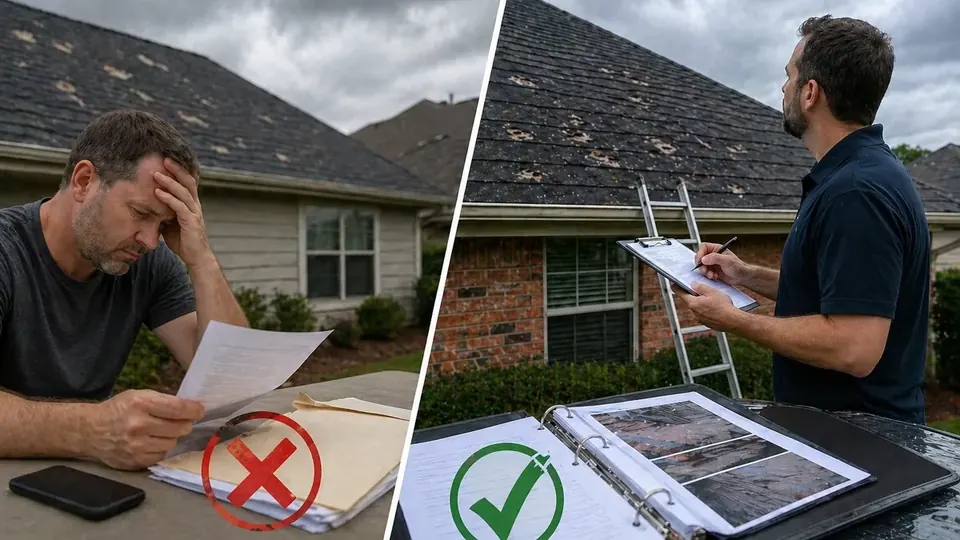
Getting a denial letter after a storm, leak, or fire is discouraging, especially when the damage is right in front of you. A denied insurance claim in San Marcos is not always the end of the claim, though. Many denials rest on a short inspection, a disputed cause of loss, missing paperwork, or a broad reading of an exclusion. As a San Marcos public adjuster, we help homeowners and business owners understand why the claim was denied, test the insurer's reasoning against the policy and the evidence, and decide whether there is a reasonable basis to ask for reconsideration.
Common Reasons Claims Are Denied in San Marcos
| Denial reason | What the insurer may be saying | Evidence that may help |
|---|---|---|
| Wear and tear / age | Roof or building damage is from deterioration, not a covered event | Storm reports for the date, hail marks on soft metals, photos showing fresh damage |
| No storm damage found | The inspection did not identify hail or wind damage | An independent inspection with test squares, close-up photos, and measurements |
| Long-term leak or seepage | Water damage happened over weeks or months | Plumber's report on the failure, timeline of discovery, moisture readings |
| Flood exclusion | Water came from surface water or rising water, not covered under the policy | Evidence the water entered through a storm-created opening or from plumbing |
| Late notice | The claim was reported too long after the loss | When the damage was discovered and why it was not visible earlier |
| Below deductible | The estimated damage is less than the deductible | A complete line-item estimate showing scope the insurer missed |
| Excluded cause | Mold, settling, foundation movement, or pests | Policy wording on exceptions and any ensuing-loss language |
Why Causation Disputes Are Common in Hays County
Hays County gets frequent spring hail. NOAA's Storm Events Database lists 180 hail reports in the county since 1967, with the heaviest concentration in April and May. Because many roofs have been through more than one storm, insurers sometimes attribute damage to age or to an earlier event that falls outside the policy period. That makes the date and cause of damage central to many denials.
Storm records can help. On May 9, 2024, for example, NOAA logged 3-inch hail at San Marcos Academy and 2.5-inch hail near the outlet mall. A report like that does not prove your roof was damaged, but paired with photos of fresh impacts it can help show when and how damage occurred. Our storm lookup tool and storm history page are good starting points.
Water claims raise a different causation question. Texas homeowners policies generally exclude flood, and many exclude repeated or long-term seepage. Whether a loss counts as a sudden discharge, storm-driven rain through a damaged roof, or surface water can decide the claim. See water damage claims and flood damage claims.

How to Read a Denial Letter
Under the Texas Prompt Payment of Claims Act (Insurance Code Chapter 542), an insurer that rejects a claim must say so in writing and give its reasons. When you get the letter, look for:
- The specific reason for the denial, not just a general statement.
- The policy provisions quoted, including the exclusion or condition relied on.
- Whether the denial is full or partial. Some letters deny one part, such as the interior, and accept another.
- What the decision was based on: the field adjuster's inspection, an engineer's report, photos, or a recorded statement.
- Any deadlines or next steps the insurer mentions.
Request a full copy of your policy and the inspection photos and reports if you do not already have them. These are the documents any response will need to address.
How a Public Adjuster Can Help After a Denial
- Policy and letter review. We compare the stated reason against the actual policy language, including exceptions to exclusions and ensuing-loss wording.
- Independent inspection. We document the damage with photos, measurements, and, where helpful, Matterport 3D imaging.
- Evidence of cause and date. We gather weather data, repair records, and other evidence tied to the reported date of loss.
- Written reconsideration request. We present the new documentation to the insurer and follow up in writing.
- Next options. If part of the claim is accepted and the dispute is about value, insurance appraisal may be worth discussing. If the dispute is about coverage itself, a Texas attorney is the right resource.
Not every denial should be challenged. Sometimes the policy clearly excludes the loss, and an honest review should say so. When there is a real basis to contest the decision, organized evidence gives the insurer something specific to reconsider. If the insurer accepted the claim but paid too little, see underpaid insurance claims instead.
Full Denial vs. Partial Denial
Not every denial letter rejects the whole claim. A partial denial may accept the roof but exclude interior water damage, or accept the dwelling but deny a fence or detached workshop. Partial denials are easy to overlook because a check arrives with the letter, and the policyholder assumes the matter is settled. Read the letter alongside the estimate to see exactly which items were excluded and why. A partial denial may raise both a coverage question for the excluded items and a value question for the accepted ones, and those questions are handled differently. A San Marcos public adjuster can help separate the two so each gets the right response.
Steps to Take Right Now
- Keep the denial letter and every email and letter about the claim.
- Do not throw away damaged materials or make permanent repairs before the damage is documented, unless needed to prevent further damage.
- Write down your timeline: when the damage happened, when you noticed it, and when you reported it.
- Gather photos from before and after the event, including real estate listing photos or older inspection reports.
- Check your policy for deadlines and consult a Texas attorney about legal ones.
Our article on what to do if your claim was denied in San Marcos walks through these steps in more detail.
Working With a San Marcos Public Adjuster
We serve San Marcos, Hays County, and surrounding Central Texas communities. Fees are disclosed in a written contract before any work begins; Texas law caps public adjuster compensation at 10% of the insurance settlement. We cannot guarantee that a denial will be reversed. Public adjusters are not attorneys and do not give legal advice. If you would like a licensed public adjuster in San Marcos to review your denial letter and policy, request a Free Claim Review.
Frequently Asked Questions
Can a denied claim be reconsidered?
Often, yes. Insurers can reconsider a decision when they receive new information, such as additional photos, an independent inspection, weather data, or a clearer explanation of how the damage happened. Reconsideration is not guaranteed, and the result depends on the policy and the facts.
The insurer says my roof damage is wear and tear. What can I do?
Ask for the inspection photos and any engineer or inspector report the decision relied on. Then compare them with your own photos, the age and condition of the roof, and storm records for your address. If there is evidence of a specific storm event, such as hail impacts on soft metals or fresh creases from wind, that evidence can be presented for reconsideration.
Does the insurer have to explain why it denied my claim?
Under the Texas Prompt Payment of Claims Act, an insurer that rejects a claim must notify the policyholder in writing and state the reasons. If your letter is vague, you can ask the insurer in writing to identify the policy provisions it relied on.
Is appraisal an option after a denial?
Appraisal generally resolves disputes over the amount of loss, not whether the loss is covered. If the insurer denied coverage entirely, appraisal usually does not address that question. If the insurer accepted part of the claim and disputes the rest on value, appraisal may be worth discussing.
Should I talk to a lawyer or a public adjuster?
They do different jobs. A public adjuster helps document and present the claim. An attorney gives legal advice and can file suit. If you are near a deadline to sue, if the insurer has accused you of misrepresentation, or if you believe the insurer acted in bad faith, consult a Texas attorney.
How long do I have to challenge a denial?
It depends on your policy and Texas law. Many Texas property policies set a contractual deadline to file suit, often two years and one day from when the claim accrued. Check your policy and consult a Texas attorney about legal deadlines; do not wait until the last minute.