
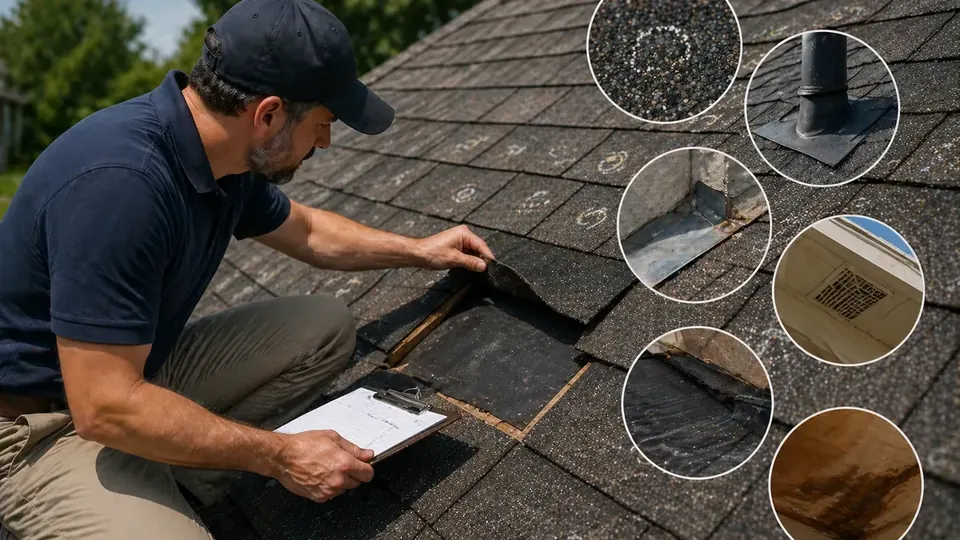
After hail, wind, fire, or water damages a San Marcos home or business, the repair has to meet the building codes in force today, not the ones in place when the building went up. That gap between “how it was built” and “how it must be rebuilt” causes a lot of confusion on insurance claims. This guide explains the San Marcos building codes that apply to insurance repairs, when you need a permit, who to call, and how ordinance or law coverage fits in. It is based on information published by the City of San Marcos and other sources cited below.
We checked the City of San Marcos sources linked on this page on October 20, 2026. Codes, fees, and procedures change. This page is general information, not code consulting or legal advice. Confirm current requirements with the San Marcos Permit Center, or with your own city or county if the property is outside San Marcos city limits, before starting work.
San Marcos building codes at a glance
The City of San Marcos adopted the 2021 editions of the International Code Council’s model codes, plus the 2020 National Electrical Code, through Ordinance No. 2023-09 (second reading February 7, 2023). The city’s Codes & Ordinances page states that the codes have been in effect since April 1, 2023. Several codes carry local amendments, so the city’s version can differ from the model text you might find at iccsafe.org.
| Code | Edition in San Marcos | Why it matters on a claim |
|---|---|---|
| International Residential Code (IRC) | 2021, as amended | Roofing, framing, and most repair work on one- and two-family homes |
| International Building Code (IBC) | 2021, as amended | Commercial buildings, apartments, and other non-IRC structures |
| International Existing Building Code (IEBC) | 2021 | How much upgrading a repair or alteration of an existing building triggers |
| International Energy Conservation Code (IECC) | 2021 | Insulation, windows, and air sealing when those components are replaced |
| International Property Maintenance Code (IPMC) | 2021 | Minimum condition standards for existing buildings |
| Mechanical, Plumbing, and Fuel Gas Codes (IMC, IPC, IFGC) | 2021 | HVAC, water, drain, and gas lines replaced after fire, freeze, or water losses |
| International Fire Code (IFC) | 2021, as amended | Fire protection items, mostly on commercial and multifamily properties |
| International Swimming Pool and Spa Code (ISPSC) | 2021 | Pool and spa repairs, such as after a tree falls into a pool enclosure |
| National Electrical Code (NEC) | 2020, as amended or as adopted by the State of Texas | Wiring replaced when walls are opened after fire or water damage |
We found no indication that San Marcos has adopted the 2024 I-Codes as of the verification date above. If you are reading this later, check the city’s page for updates.
Official sources
- City of San Marcos: Codes & Ordinances
- Building Code Ordinance 2023-09 (PDF)
- City of San Marcos Construction Requirements and Notes (PDF)
- City of San Marcos: Permit Center
- Permit Requirement Determination Form (PDF)
Local amendments that affect insurance repairs
Three of the city’s amendments come up regularly when a property is being repaired after a loss:
- Reroofing. The city added the same exemption to both the IBC and the IRC: “Roof covering replacement permits are not required unless the weight of the replacement roof is heavier than the existing roof covering.”
- Foundations. All foundations must be designed by a licensed engineer, who submits a sealed letter of conformance. That can matter when a claim involves a foundation damaged by a fallen tree, a fire, or a covered plumbing leak.
- Extraterritorial jurisdiction (ETJ). A project in the city’s ETJ that receives City of San Marcos water, wastewater, or electric service must obtain a building permit, even though it is outside city limits.
Quick reference for San Marcos property owners
| Topic | What to know |
|---|---|
| Reroof permit | Not required unless the new roof covering is heavier than the existing one. Use the Permit Requirement Determination Form or call the Permit Center if unsure. |
| Other repairs | Structural, electrical, plumbing, and mechanical work generally needs a permit. Confirm your specific scope with the Permit Center. |
| Permit Center | 630 E. Hopkins Street, San Marcos, TX 78666 · 512-805-2630 · permitinfo@sanmarcostx.gov |
| Online permits | MGO Connect (MyGovernmentOnline) at mgoconnect.org; older city documents call it MyPermitNow. |
| Foundations | Must be engineer-designed with a sealed letter of conformance. |
| ETJ properties | Need a city building permit if served by City water, wastewater, or electric. |
| Wind | Wind design follows the adopted IRC/IBC and the standards they reference. No city-specific windstorm roofing amendment was found, and TDI windstorm certification does not apply in Hays County. |
| Insurance | Code-upgrade costs may be paid under ordinance or law coverage, usually a separate, limited coverage. A code requirement alone does not obligate the insurer to pay. |
Roof repair and replacement in San Marcos
Roofs are where codes and claims meet most often here. Hail is the most frequently reported severe weather in the Hays County NOAA record, with 180 reports, and the largest stone on record, 4.5 inches, fell just north of San Marcos on March 16, 2000. Composition shingles cover most homes in the city’s subdivisions, while standing-seam and exposed-fastener metal roofs are common on Hill Country homes, barns, and outbuildings, and flat or low-slope roofs are typical on commercial buildings along I-35.
The local reroof rule is good news for most homeowners: replacing a hail-damaged shingle roof with new shingles, or a metal roof with similar metal, typically does not require a city permit. Switching to a heavier covering, for example from composition shingles to concrete tile, is the situation the amendment carves out, and that also raises questions about whether the existing framing can carry the load. If the roof deck or framing needs structural repair, plan on talking with the Permit Center.
No permit does not mean no rules. The model IRC states that an exemption from permit requirements does not authorize work that violates the code, so the new roof should still meet the adopted code and the manufacturer’s installation instructions for underlayment, flashing, drip edge, fastening, and ventilation. Insurer estimates sometimes price the shingles or panels but leave out these components. Whether they are owed depends on whether they are part of repairing covered damage and on any ordinance or law coverage in your policy. For more, see roof damage insurance claims and how to review an underpaid roof insurance estimate.
Wind-resistant construction
San Marcos has a long record of damaging straight-line wind. NOAA describes 70 to 80 mph winds along I-35 on January 13, 2007 that tore metal roofs off several buildings, and a 75 mph gust on June 9, 2019 that partly peeled the metal roof off a house in San Marcos. Wind requirements come from the adopted IRC and IBC and the engineering standards they reference, which set design wind speeds by location and building type. We do not list a design wind speed here; your contractor, designer, or the Permit Center can confirm it for a specific project.
A common point of confusion: the Texas Department of Insurance windstorm certification program (WPI-8) applies only inside the Texas Windstorm Insurance Association catastrophe area on the coast. Hays County is not in that area, so San Marcos properties usually get wind and hail coverage from their regular insurer (or the Texas FAIR Plan where applicable), and WPI-8 certification does not apply.
Structural, electrical, and plumbing repairs
Fire, fallen trees, and long-running water leaks can reach framing, trusses, wiring, plumbing, and foundations. That work generally needs permits and inspections, may need an engineer, and must meet the 2021 codes and the 2020 NEC. Because the International Existing Building Code is part of the adopted package, how much upgrading a repair triggers can depend on the scope and type of work. Examples of items that can come into play include:
- Smoke and carbon monoxide alarm requirements tied to permitted interior work.
- Electrical updates when walls are opened and circuits are replaced after a fire or flood.
- Insulation and air-sealing requirements under the 2021 IECC when those components are replaced.
- Engineer-designed foundation repairs under the city’s foundation amendment.
Ask the Permit Center or a licensed contractor which upgrades your project actually requires, and get that in writing where you can. If your home is one of the older houses in the historic neighborhoods near downtown, ask the city whether any additional review applies before replacing windows, siding, or roofing.
Inspections and contractor responsibilities
Permitted work is inspected in stages and finishes with a final inspection. Inspection results and correction notices make strong claim documents, because they show what the city actually required on the job. If an inspector calls for an item the insurer’s estimate left out, that notice supports a supplement.
On most jobs the contractor pulls any required permit, builds to code, and schedules inspections. Before work starts, ask the contractor to confirm whether a permit is needed, explain which code items are in the price, and list code-required work separately from like-kind repairs. That makes it far easier to present code items to the insurer. Keep in mind that under Texas Insurance Code Chapter 4102 a public adjuster may not take part in repairing a property on a claim they adjust, so your contractor and your public adjuster have separate roles.
Ordinance or law coverage
Ordinance or law coverage pays, up to its limit, for the increased cost of meeting building codes when repairing covered damage. It is often a separate coverage or endorsement, and the limit may be a percentage of the dwelling coverage or a fixed dollar amount. Some policies carry little or none. Some pay the code portion only after the work is completed. Read your declarations page and policy forms, and see our article on building codes and insurance repairs in San Marcos for a deeper explanation.
A requirement under the San Marcos building codes does not automatically mean your insurer must pay for it. Payment for code upgrades depends on your policy’s ordinance or law coverage, its limit, and its conditions.
Nearby cities and unincorporated Hays County
The City of San Marcos codes apply only inside city limits and to qualifying ETJ projects. Neighboring cities run their own permit offices, adopt their own code editions and amendments, and set their own fees and inspection procedures. That includes Kyle, Buda, Wimberley, and Dripping Springs in Hays County; Lockhart and Martindale in Caldwell County; New Braunfels in Comal and Guadalupe counties; and Seguin in Guadalupe County. Contact the city where the property is located before work begins.
In unincorporated Hays County, the county does not issue residential building permits or enforce a residential building code. It does handle development, septic (OSSF), and floodplain permitting, and it applies the 2018 International Fire Code to new commercial and multifamily buildings. Details are on the county’s Development Permits page. For a repair in an unincorporated area, ask your contractor which standards and manufacturer instructions the work will follow, and get that scope in writing.
When code items lead to a claim dispute
Disagreements usually involve whether a code item was required, whether it relates to covered damage, or whether the policy has enough ordinance or law coverage. Useful steps:
- Get written confirmation of the requirement from the Permit Center, an inspector, or a licensed professional.
- Have your contractor itemize code-required work separately.
- Compare the insurer’s estimate line by line with the actual scope, or request an insurance estimate review.
- If the disagreement is over the amount of loss, your policy’s appraisal clause may apply. For coverage disputes or legal deadlines, consult a Texas attorney.
Confirm before you build
This page reflects our review of City of San Marcos sources as of October 20, 2026. Before starting any repair, contact the Permit Center at 630 E. Hopkins Street, 512-805-2630, or through the Permit Center web page to confirm permit, code, and inspection requirements. If you have questions about how those requirements affect your insurance claim, a San Marcos public adjuster can help through a Free Claim Review.
Frequently Asked Questions
Which building codes does the City of San Marcos enforce?
The 2021 International Codes (including the IRC, IBC, IEBC, IECC, IPMC, IMC, IPC, IFGC, IFC, and ISPSC) and the 2020 National Electrical Code, adopted by Ordinance 2023-09. The city’s Codes & Ordinances page says these have been in effect since April 1, 2023. Several have local amendments, so confirm details with the Permit Center.
Do I need a permit to replace my roof in San Marcos?
Usually not for a like-for-like reroof. The city’s amendments to both the IRC and IBC say roof covering replacement permits are not required unless the replacement roof is heavier than the existing roof covering. If you are moving to a heavier material, or the job involves structural work, contact the Permit Center at 512-805-2630 to confirm. The city also offers a Permit Requirement Determination Form for exactly this kind of question.
If no permit is needed, does the new roof still have to meet code?
Under the model International Residential Code, an exemption from a permit does not authorize work that violates the code. In practice that means a reroof should still be installed to the requirements of the adopted code and the manufacturer’s instructions, even without a permit. Ask your roofer to explain which code items are included in the bid.
Will my insurance pay for code upgrades?
Not automatically. Extra costs to bring repairs up to current code are usually paid under ordinance or law coverage, which is often a separate, limited coverage or endorsement. Check your declarations page and policy forms for the limit and conditions.
I live in Kyle, Buda, Wimberley, or New Braunfels. Do the San Marcos rules apply to me?
No. Kyle, Buda, Wimberley, Dripping Springs, New Braunfels, Lockhart, Seguin, and Martindale each have their own permit process and adopted codes. Hays County does not issue residential building permits in unincorporated areas. Check with the city or county where the property sits before work begins.
Does TDI windstorm certification apply to San Marcos roofs?
No. Texas Department of Insurance windstorm (WPI-8) certification applies only in the Texas Windstorm Insurance Association catastrophe area along the coast. Hays County is not in that area.