
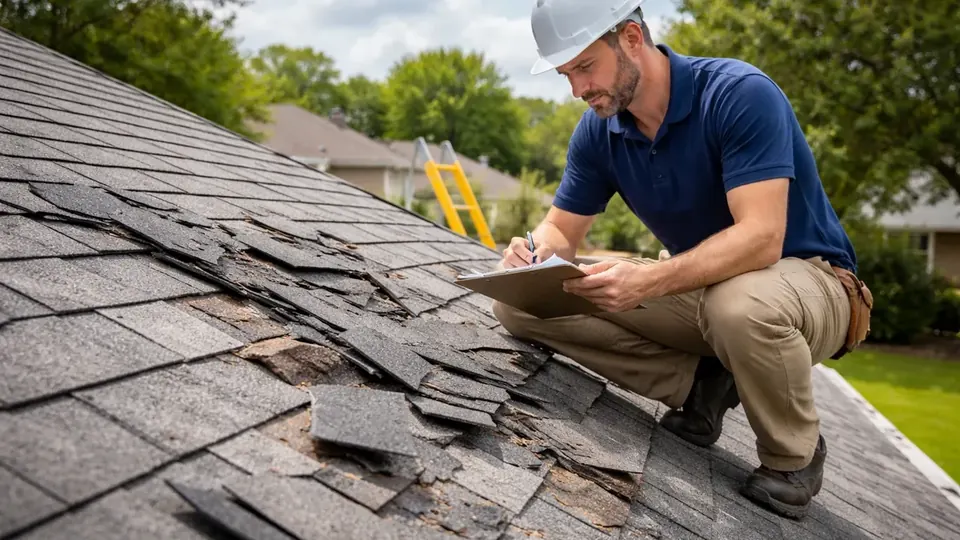
Most property insurance claims in Central Texas eventually involve the roof. Hail, straight-line wind, falling limbs, and the occasional ice storm all take a toll, and roof damage insurance claims in San Marcos often turn on details a homeowner never sees: which line items made it into the estimate, how depreciation was calculated, and whether the policy pays replacement cost at all. As a public adjuster in San Marcos, we focus on those details so the settlement reflects the roof you actually have.
Roof Types We See Across Hays County
Local construction varies a lot within a short drive, and each roof type raises different claim questions.
- Composition shingle roofs dominate the newer subdivisions along I-35 in San Marcos, Kyle, and Buda. Disputes usually involve whether damage is functional, how many slopes are affected, and whether repairs can match the existing shingles.
- Standing-seam and exposed-fastener metal roofs are common on Hill Country homes, barns, and outbuildings toward Wimberley and Dripping Springs. Cosmetic damage endorsements and fastener damage are frequent issues.
- Flat and low-slope commercial roofs along the I-35 frontage involve membranes, insulation boards, and rooftop equipment, which call for a different kind of scope. Our commercial property claims page covers those.
- Older roofs in historic neighborhoods near downtown may have multiple layers, unusual materials, or decking that does not meet current spacing, all of which affect cost.
What We Check in a Roof Insurance Estimate
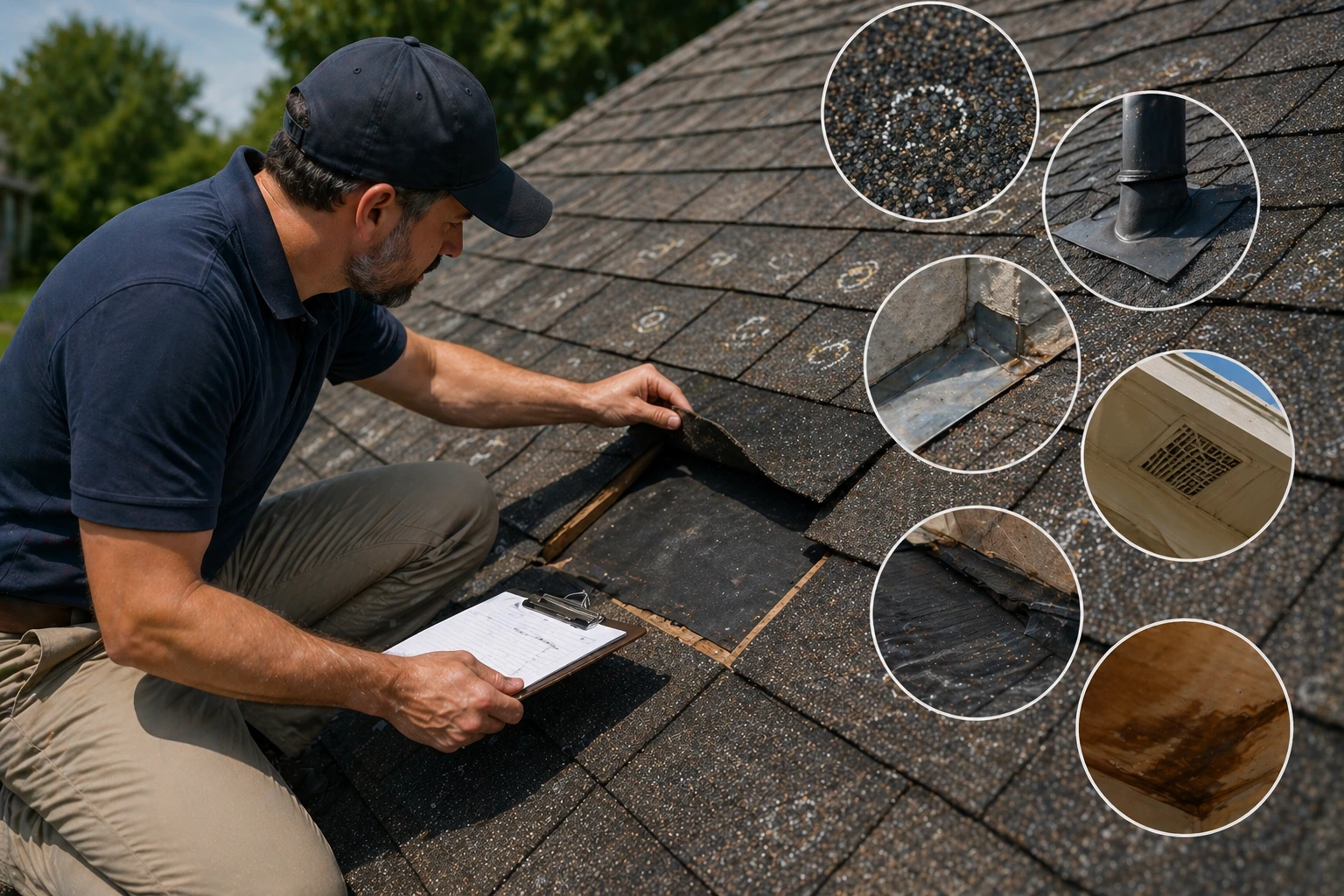
A roof estimate is a list of materials and labor. When an item is left off, it simply is not paid. We build our own line-item estimate and compare it against the insurer’s, looking for gaps like these:
| Item | Why it matters | Common question |
|---|---|---|
| Tear-off and disposal | Every layer removed costs labor and haul-off | Are additional layers included? |
| Underlayment | Required beneath new roofing | Is the type and quantity correct? |
| Starter course and ridge cap | Separate products from field shingles | Were they priced separately or ignored? |
| Drip edge, flashing, valleys | Edges and transitions where leaks begin | Is replacement required or reusable? |
| Pipe jacks, vents, turbines | Often damaged by hail or replaced with the roof | Is each penetration counted? |
| Steep and high-roof charges | Safety equipment and slower production | Does the pitch or height qualify? |
| Waste factor | Cutting at hips and valleys wastes material | Is the percentage realistic for the roof shape? |
| Decking | Damaged or noncompliant sheathing found at tear-off | Handled by supplement after inspection? |
Items discovered after tear-off are normally added through a claim supplement, supported by photos taken while the roof is open. If you already have the insurer’s numbers, our article on reviewing an underpaid roof estimate walks through the process.
Local Codes and How They Affect a Roof Claim
The City of San Marcos has enforced the 2021 International Codes, including the IRC and IBC, since April 1, 2023, under Ordinance 2023-09. One local amendment is directly relevant to roofs: a roof covering replacement permit is not required unless the replacement roof is heavier than the existing roof covering. Check the city’s Codes & Ordinances page for the current rules.
Code requirements still apply to the work even when no permit is pulled, and they can add cost. Whether the insurer pays for that added cost depends on your ordinance or law coverage, which is often a separate, limited coverage. Outside city limits, Hays County does not issue residential building permits, and nearby cities run their own permit offices. Our building codes and insurance repairs article explains the interaction in more depth.
How Your Policy Pays for a Roof
Two roofs with identical damage can be paid very differently depending on the policy:
- Replacement cost value (RCV): the insurer usually pays actual cash value first, then releases recoverable depreciation after repairs are complete.
- Actual cash value (ACV) only: depreciation is not recovered, so the age and condition of the roof weigh heavily.
- Roof payment schedules: some Texas policies pay a percentage of roof cost based on the roof’s age.
- Wind/hail deductibles: often a percentage of the dwelling limit rather than a flat amount.
Read the declarations page and roof-related endorsements before the inspection. Our RCV versus ACV guide breaks the math down with examples.
Before the Insurance Adjuster Inspects Your Roof
The insurer’s inspection often sets the tone for the rest of the claim, so a little preparation goes a long way:
- Photograph from the ground first. Take wide shots of every side of the house, then closer shots of gutters, downspouts, vents, and anything on the ground such as shingle pieces or granules collected at downspout outlets.
- Check the attic and ceilings. Look for daylight through the decking, damp insulation, or new stains, and photograph them with the date.
- Protect the roof, carefully. If water is coming in, a contractor can tarp the damaged area. Keep the invoice; reasonable emergency repairs are usually part of the claim.
- Collect the paperwork. Have the declarations page, roof endorsements, any prior roof invoices, and the roof’s installation date ready.
- Be present if you can. Walk the adjuster to the interior damage and ask which slopes and items they are including.
Avoid getting on a steep or wet roof yourself. A fall is far more costly than any claim. Our claim documentation checklist lists what to gather, and the storm lookup helps confirm the date when weather caused the damage.
Our Roof Claim Process
- Review the policy, declarations page, and any correspondence from the insurer.
- Inspect the roof slope by slope, plus the attic and interior where leaks appeared.
- Document damage with organized photos and measurements, and confirm the storm date when weather caused the loss.
- Prepare an Xactimate estimate and present it to the carrier with a clear explanation of each difference.
- Track depreciation release, supplements, and final payment until the claim is closed.
When a Roof Claim Needs Outside Help
Consider talking with a San Marcos public adjuster if the insurer approved a repair but your roofer says replacement is needed, if the estimate omits items your contractor priced, if depreciation looks excessive for the roof’s age, or if a leak claim was denied as wear and tear. Roof damage from hail and wind often overlaps, so our hail damage claims and wind damage claims pages may also help. When you are ready, request a free claim review.
Frequently Asked Questions
Do I need a permit to replace my roof in San Marcos?
Under the City of San Marcos local amendments to the 2021 codes, a roof covering replacement permit is not required unless the new roof covering is heavier than the existing one. Other cities such as Kyle, Buda, and New Braunfels have their own permit offices, so check with your city. See our local building codes page.
Why did my insurer pay only part of the roof cost up front?
Under many replacement-cost policies, the insurer first pays actual cash value (replacement cost minus depreciation) and releases recoverable depreciation after the work is completed, often within a deadline in the policy. Some Texas roof coverage is ACV-only or follows a roof payment schedule, which works differently. Your declarations page and endorsements explain which applies.
What roof items are often missing from insurance estimates?
Common gaps include starter course, ridge cap, drip edge, flashing, pipe jacks, vents, underlayment, steep or high-roof charges, and removal of additional layers. Whether each item belongs depends on the roof and the damage, which is why a line-by-line comparison helps.
Will insurance pay for code upgrades on my roof?
Not automatically. Increased costs to meet current building codes are typically paid only under ordinance or law coverage, up to its limit. Check whether your policy includes that coverage and how much.
Can I pick my own roofer?
Generally, yes. Under Texas rules, a public adjuster cannot participate in the repair of a property on a claim they adjust, so we stay independent of contractors and focus only on the claim.
What does a public adjuster charge for a roof claim?
Fees are disclosed in a written contract before any work begins; Texas law caps public adjuster compensation at 10% of the insurance settlement. A free claim review lets you learn whether hiring us makes sense before you sign anything.