

Key takeaways
- The best time to bring in a public adjuster is early, before the first inspection, but help is often still possible after an estimate, a payment, or even a denial.
- The real limits are deadlines: policy conditions, recoverable depreciation windows, appraisal timelines, and contractual deadlines to file suit.
- Many Texas property policies set a deadline to sue, often two years and one day from when the claim accrued. Check your policy and talk with a Texas attorney.
- Weather-related lawsuits generally require written notice at least 61 days before filing under Insurance Code Chapter 542A. That is attorney territory, not public adjuster territory.
- If you signed a release or the claim is in litigation, have an attorney review your options before hiring anyone else.
People often call a public adjuster with the same worried question: “Did I wait too long?” Maybe the insurer already sent a check that barely covers the shingles. Maybe a denial letter arrived. Maybe a ceiling stain showed up months after the spring hail. So when is it too late to hire a public adjuster? The honest answer is that there is no single cutoff. It depends on where your claim stands and which deadlines apply. This article walks through each stage of a Texas property claim and what a public adjuster can, and cannot, still do.
One important note up front: public adjusters are not attorneys. When a question involves a lawsuit, a deadline to sue, or a pre-suit notice, the right person to ask is a Texas attorney. We will point out where those lines are.
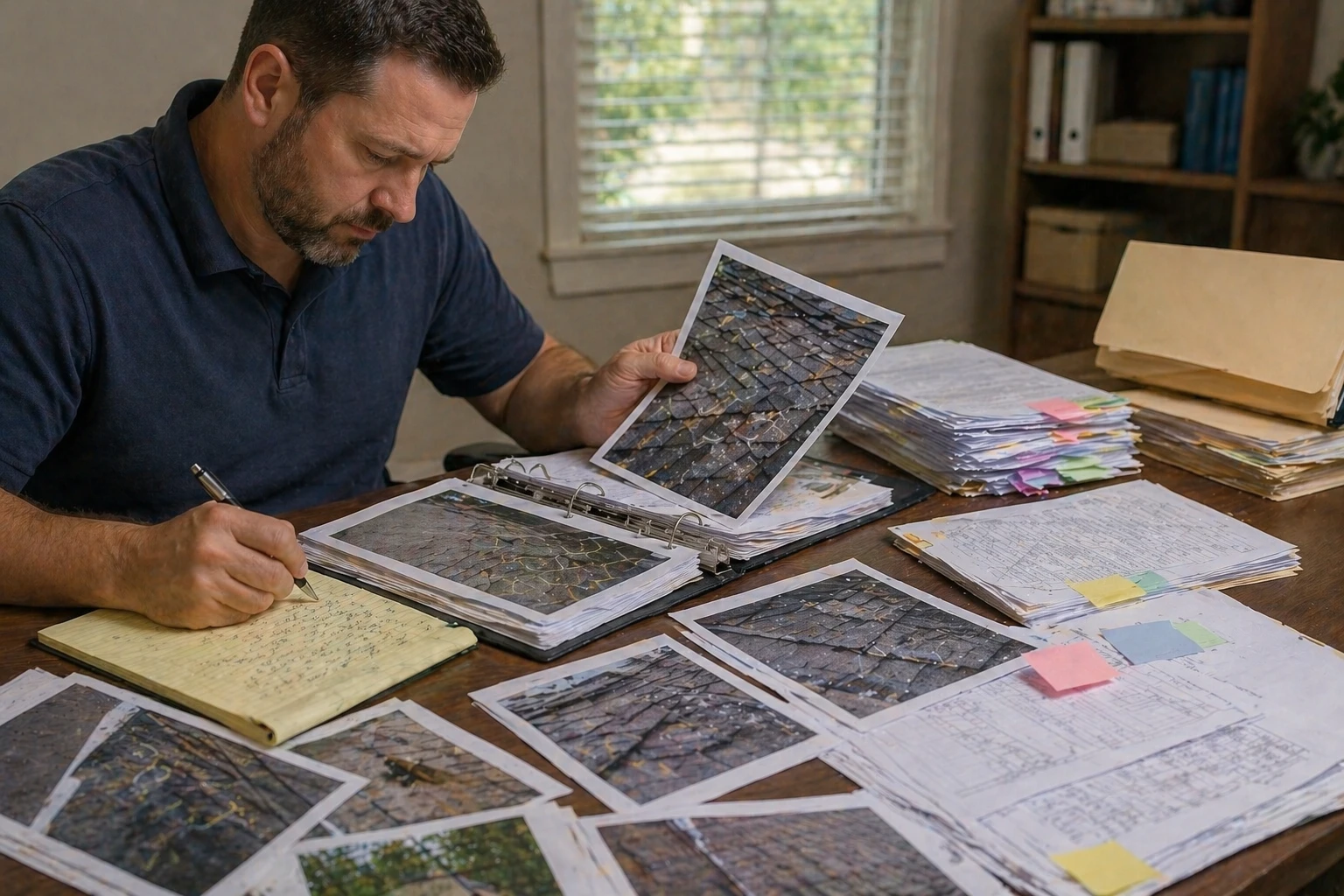
The short answer: earlier is better, but later is often still possible
The earlier a public adjuster is involved, the more of the record they help create: the first photos, the first estimate, the first conversations with the insurer’s adjuster. Every later stage builds on that record. Coming in late means working with whatever has already been said and submitted.
But “late” is not the same as “too late.” Many claims are underpaid or partly denied after the insurer’s first inspection, and that is exactly when a lot of San Marcos property owners first look for help. What actually closes the door is usually one of these:
- A policy deadline passes, such as a window to submit a proof of loss or to complete repairs and collect recoverable depreciation.
- You sign a release or settlement agreement that resolves the claim.
- A contractual or legal deadline to file suit runs out.
- The claim moves into litigation, where an attorney takes the lead.
Stage by stage: what a public adjuster can still do
Before you file the claim
This is the ideal time. A public adjuster can review your policy, help you understand deductibles and exclusions, and document the damage before the insurer’s inspection. You should still report the loss promptly. Most policies require prompt notice, and waiting can hurt your claim. Bringing in help and reporting the claim can happen in the same week.
After filing, before the insurer’s inspection
Still an excellent time. Your public adjuster can be present at the inspection, point out damage that is easy to miss (soft metal dents, cracked tiles, interior moisture), and make sure the insurer’s adjuster sees the full scope.
After the inspection, before the estimate
Help is still very practical here. A public adjuster can prepare an independent estimate and documentation to submit while the insurer is still evaluating the claim.
After the insurer’s estimate or first payment
This is the most common time people reach out. If the estimate misses rooms, roof components, or realistic local pricing, a public adjuster can review it line by line and submit a supplement or request reconsideration. Watch two things closely: whether you signed anything described as a release or final settlement, and your policy’s deadline for completing repairs and claiming recoverable depreciation. Our article on replacement cost vs. actual cash value explains that holdback.
After a full or partial denial
A denial letter should state the reason. A public adjuster can compare that reason with your policy language and the physical evidence, and in some cases request reconsideration with new documentation, such as photos of hidden damage or weather data for the date of loss. If the denial turns on a legal interpretation, or a deadline to sue is getting close, talk with a Texas attorney. Our guide What to Do If Your Claim Was Denied in San Marcos covers the steps.
After the claim is closed
A closed claim is not always a finished one. Insurers may reopen a claim when new, related damage is found, for example roof decking that was rotted under shingles, or an interior leak that traces back to the same storm. Whether that is possible depends on the policy, the facts, any release you signed, and how much time has passed. A public adjuster can help assess whether there is a supportable basis to ask.
Supplements during repairs
Repairs often uncover damage no one could see during the first inspection. Supplements are a normal part of many claims, and a public adjuster can document and submit them as they come up. Our hail damage claim supplements article explains how they typically work.
When appraisal has been invoked
If you and the insurer agree the damage is covered but disagree on the amount, many policies let either side demand appraisal. Each side picks an appraiser, the appraisers pick an umpire, and an award agreed to by any two is generally binding on the amount (your policy language controls). Appraisal decides amount, not coverage. Many policies require each appraiser to be “competent and disinterested,” so read that wording when choosing yours. A public adjuster can still help prepare the documentation behind the process. See our insurance appraisal page.
When a lawsuit is being considered or filed
At this point, a Texas attorney should be leading. Two rules come up often:
- Contractual deadlines to sue. Many Texas property policies limit the time to file suit, often to two years and one day from when the claim accrued, as allowed under Civil Practice and Remedies Code §16.070. Your policy wording matters, and so does how a court would measure “accrued.” That is a legal question.
- Chapter 542A pre-suit notice. For weather-related property claims, Insurance Code Chapter 542A generally requires written notice to the insurer at least 61 days before filing suit. An attorney should prepare and send it.
If you are anywhere near these deadlines, call an attorney first. A public adjuster cannot extend a legal deadline or give legal advice about one.
Claim timing at a glance
| Claim stage | Can a public adjuster still help? | What to watch |
|---|---|---|
| Before filing | Yes, the ideal time | Report promptly; mitigate further damage |
| Filed, before inspection | Yes | Inspection date; have documentation ready |
| After inspection, before estimate | Yes | Requests for information from the insurer |
| After estimate or first payment | Often | Any release you sign; recoverable depreciation deadline |
| After partial or full denial | Often, depending on the reason | Denial reason; suit-limitation clause |
| Claim closed | Sometimes, if new related damage exists | Release language; time elapsed |
| During repairs | Yes, for supplements | Document hidden damage before it is covered up |
| Appraisal invoked | Yes, in a support role | Policy appraisal wording and timelines |
| Pre-suit (Chapter 542A notice) | Limited; attorney leads | 61-day notice requirement |
| Lawsuit filed | Only as your attorney directs | Court deadlines |
| Suit-limitation period expired | Usually too late | Ask an attorney whether any option remains |
Insurer deadlines that work in your favor
Timing is not only about your deadlines. Texas’s Prompt Payment of Claims law sets deadlines for insurers, too. In general, an insurer has 15 days after notice of a claim to acknowledge it, begin its investigation, and request the information it needs. After receiving everything it asked for, it generally has 15 business days to accept or reject the claim, or it can notify you that it needs more time, up to 45 more days. Once it accepts, payment is generally due within 5 business days. After a weather catastrophe or major natural disaster declared by the commissioner, these deadlines can be extended by 15 days. Surplus lines insurers can have different timeframes.
If your claim seems stuck, a public adjuster can help keep a dated record of every request and response. Our article on delayed claims and delayed insurance claims page go further.
Late-discovered damage in San Marcos
Some damage simply takes time to show itself. A hail-bruised roof may not leak until the next heavy rain. A small supply-line leak behind a cabinet may not stain the ceiling for weeks. In Hays County, where NOAA records show hail peaking in April and May and flash flooding peaking in June, May, and October, it is common for a fall storm to reveal damage from spring.
If you find damage you believe came from an earlier storm, report it to your insurer promptly, document it carefully, and note the date you discovered it. Being able to point to a specific storm helps. Our storm history page and the NOAA records behind it can help you identify likely dates. For example, NOAA lists 3-inch hail at San Marcos Academy west of the city on May 9, 2024 (NCEI event record).

What to do right now if you think you are running late
- Find your policy. Read the conditions section for notice, proof of loss, appraisal, and “suit against us” language.
- Gather your claim file. Estimates, letters, emails, payment records, and photos. Our claim documentation checklist helps.
- Do not sign a release you do not fully understand.
- Note every date: date of loss, date reported, inspection date, payment dates, and denial date.
- Get a review. A public adjuster can tell you whether there is room to supplement or request reconsideration. An attorney can tell you about legal deadlines.
Get a timing check from a San Marcos public adjuster
If you are not sure where your claim stands, we can take a look. San Marcos Public Adjuster is a public adjusting service of Rise Public Adjusting LLC (TDI license 3356839), serving San Marcos, Hays County, and nearby Central Texas communities. We will tell you honestly whether a public adjuster can still add value, and when your question is really one for an attorney.
Request a Free Claim Review, call +1 (832) 503-5866, or email info@sanmarcospublicadjuster.com. You can also learn about our San Marcos public adjuster services or read how to find and vet a public adjuster.
Frequently Asked Questions
Can I hire a public adjuster after my claim was paid?
Often, yes. If the payment does not cover the documented damage, a public adjuster may be able to review the estimate and submit a supplement or request reconsideration, depending on the policy and the claim’s status. Check whether you signed any release, and keep track of policy deadlines such as the window to collect recoverable depreciation.
Can a public adjuster help after a denial?
A public adjuster can review the denial letter against your policy and the damage, and may be able to request reconsideration with additional documentation. If the denial turns on a legal question or a lawsuit deadline is approaching, talk with a Texas attorney.
Is there a deadline to hire a public adjuster in Texas?
There is no separate deadline for hiring one, but your claim has its own deadlines, set by the policy and Texas law. The later you are in the process, the fewer options remain. Read your policy’s conditions section and ask an attorney about any deadline to sue.
What is the Chapter 542A notice?
Texas Insurance Code Chapter 542A generally requires written notice to the insurer at least 61 days before filing suit on certain weather-related property claims. It is a legal step, so a Texas attorney should handle it.
Can a public adjuster help if my insurer demanded appraisal?
A public adjuster can help you understand the appraisal process and prepare damage documentation. Many policies require each appraiser to be competent and disinterested, so check your policy wording when choosing who serves as your appraiser.
I already hired an attorney. Can I still use a public adjuster?
Ask your attorney. Once a claim is in litigation, the attorney directs strategy, and any role for a public adjuster should be coordinated through them.
Sources and further reading
This article is general information about property insurance claims in Texas, not legal advice, and not a promise of any coverage or outcome. Your policy language and the facts of your loss control your claim.