
Key takeaways
- A supplement asks the insurer to revise its estimate on an open claim to add missed items, correct quantities or pricing, or include damage found after the first inspection.
- Commonly missed hail items include starter, drip edge, ridge cap, flashing, roof vents, gutters, window screens, rooftop HVAC components, and steep or high-roof labor.
- Hidden damage, such as deteriorated or damaged decking or extra shingle layers, often appears only during tear-off and needs prompt photos and notice.
- Code items depend on the adopted code and your ordinance or law coverage. Good documentation, a line-by-line comparison, and timely written requests matter more than volume.
Hail claims in Central Texas rarely end with the first estimate. The adjuster inspects, writes a scope, and the payment arrives, and then the roofer opens up the roof and finds something no one could see from the surface. That is where hail damage claim supplements come in. A supplement is the normal, contract-based way to bring the estimate in line with the real cost of repair. Understanding how supplements work can help San Marcos homeowners and business owners avoid paying out of pocket for covered work.
This guide is written by a San Marcos public adjuster who reviews hail estimates for properties across Hays County. It explains what a supplement is, the items most often left out, how to document hidden damage and code items, and how to time and present a request so it gets a fair review.
What a hail damage claim supplement is
A supplement is a written request to revise an insurer's estimate on an existing claim. It is not a new claim. It uses the same claim number and date of loss and asks the insurer to account for something the original scope did not. Supplements usually fall into four groups:
- Missed items: work that is plainly necessary to repair the damage but was not written, such as starter strip or ridge cap.
- Quantity corrections: roof area, waste, linear feet of gutter, or number of vents measured short.
- Pricing corrections: line items priced below what it actually costs to do the work in the local market at the time of repair.
- Newly discovered damage: conditions found during tear-off or repair that were hidden at the first inspection.
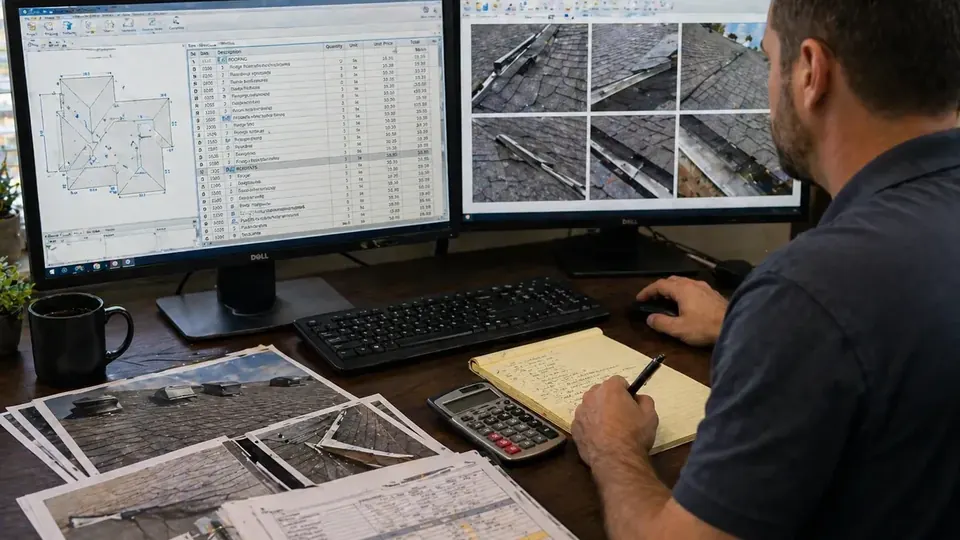
Most insurers write property estimates in Xactimate, a line-item estimating program. A supplement is easiest to evaluate when it follows the same structure, so the adjuster can compare item to item and see exactly what changed and why.
Why the first hail estimate is often incomplete
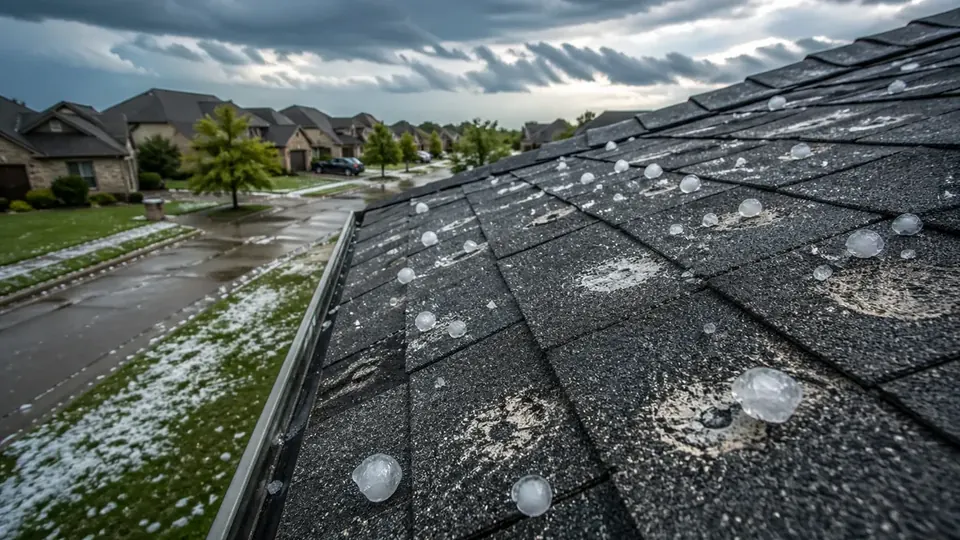
Hail is a common loss in this part of Texas. NOAA's Storm Events Database lists 180 hail reports in Hays County from 1967 through 2026, with the largest numbers in May and April. When a big storm hits, such as the May 9, 2024 event that produced 3-inch hail at San Marcos Academy and 2.5-inch hail near the outlet mall (NOAA NCEI event record), adjusters may be inspecting many roofs a day. Under that pressure, estimates tend to capture the obvious items and miss the details. Some reasons:
- The inspection happened before a contractor measured or opened the roof.
- The adjuster used a default template that leaves out accessories and trade-specific steps.
- Steep slopes, second-story eaves, or wet conditions limited what could be checked safely.
- Interior, fence, or outbuilding damage was not reported until later.
None of that means the insurer acted improperly. It means the estimate should be treated as a working document that may need to change as more is known. If you want a deeper method for checking a roof estimate, see our guide on how to review an underpaid roof insurance estimate.
Commonly missed items on hail estimates
The table below lists items we often see left out or under-measured on hail claims for shingle and metal roofs in the San Marcos area. Not every item applies to every roof, and coverage always depends on the policy and the damage.
| Item | Why it gets missed | What supports it |
|---|---|---|
| Starter strip at eaves and rakes | Left off templates or assumed included in shingles | Manufacturer installation instructions; photos at eaves |
| Drip edge | Existing edge looks undamaged, or none was installed before | Adopted code requirement; photos; measurements |
| Hip and ridge cap | Measured short or priced as cut-up field shingles | Roof diagram with hip and ridge lengths; product type |
| Step, counter, and headwall flashing | Treated as reusable when it cannot be removed and reset without damage | Close-up photos; contractor explanation of tie-ins at walls and chimneys |
| Pipe jacks, roof vents, turbines | Counted short or not inspected for hail dents | Count and photos of each component |
| Waste factor | Default percentage too low for a cut-up roof with many hips and valleys | Measurement report and roof geometry |
| Steep and high-roof charges | Pitch or story height not recorded | Pitch gauge photos; elevation photos |
| Gutters, downspouts, and screens | Dents and torn screens overlooked on the walk-around | Photos with chalk marks or a reference object; linear footage |
| Rooftop and ground HVAC components | Condenser fin damage not inspected or deferred | HVAC technician findings and photos |
| Detach and reset items | Satellite dishes, solar, or lights on the roof not included | Photos and a list of roof-mounted equipment |
| Overhead and profit | Left off when the repair needs several trades coordinated | Scope showing multiple trades and the need for a general contractor |

Hidden damage found during tear-off
Some of the most important supplement items cannot be seen until the old roof is off. Common examples include:
- Damaged or deteriorated decking that must be replaced before new shingles can be installed properly.
- Additional layers of shingles under the top layer, which add tear-off and disposal labor.
- Underlayment and flashing problems at valleys, walls, and penetrations.
- Water damage to sheathing or framing where hail fractures let water in.
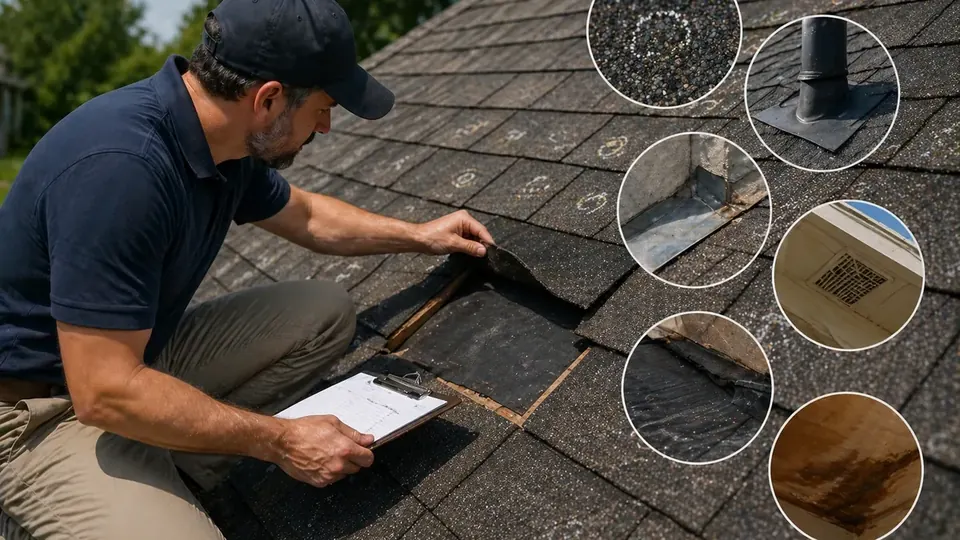
When the crew finds something like this, the most important thing is to stop and document before covering it up. Take wide and close photos with a tape measure in view, note the location on a roof diagram, and record the quantity, such as the number of decking sheets. Then notify the insurer promptly in writing. Many insurers want a chance to see the condition or at least review photos before it is repaired, so discuss this with your adjuster and contractor before the job starts. Decking and similar hidden items can be some of the easiest supplements to support, and some of the hardest once they are buried under new shingles.
Code items on San Marcos roofs
Code-related items are a frequent source of confusion. The City of San Marcos has enforced the 2021 International Codes, including the IRC and IBC, since April 1, 2023 (City of San Marcos Codes & Ordinances). Under a local amendment, a roof covering replacement permit is not required unless the new roof covering is heavier than the existing one. Even without a permit, the work is still expected to follow the adopted code and the manufacturer's installation instructions.
That matters for supplements in two ways:
- Some items are part of a proper installation. For example, the 2021 IRC addresses drip edge and underlayment for asphalt shingle roofs. If those items are required to complete the repair correctly, they can be part of the repair scope.
- Payment for code upgrades depends on coverage. When a code requirement adds cost beyond replacing what was there, payment usually depends on ordinance or law coverage, which is often a separate, limited coverage. A code requirement does not automatically mean the insurer pays for it.
Kyle, Buda, Wimberley, Dripping Springs, New Braunfels, Lockhart, and Seguin each have their own permit offices and adopted codes, and Hays County does not issue residential building permits in unincorporated areas. Check with the right office for your address. Our local building codes page and the article on building codes and insurance repairs go further on this topic.
Documentation and timing
A supplement is only as strong as the evidence behind it. A complete request usually includes:
- A cover letter with the claim number, date of loss, and a short list of what is being added or corrected.
- A line-item estimate that tracks the insurer's format, showing each new or changed item.
- Dated photos tied to each item, including wide shots for location and close-ups for detail.
- Measurements or a measurement report for quantities.
- Contractor invoices or bids for items that are hard to price, such as specialty materials.
- Code or manufacturer references for items required for proper installation.
On timing, sooner is almost always better. Send newly discovered damage as soon as it is found. Send missed-item and pricing supplements once you have reviewed the estimate and gathered support, not after the job is finished and the evidence is gone. Keep an eye on policy deadlines, including any deadline to complete repairs and recover depreciation under a replacement cost policy and any contractual deadline to file suit. Texas Prompt Payment rules in Insurance Code Chapter 542 also set response timelines once the insurer has the information it requested.
Communicating with the carrier
Supplements go more smoothly when they are easy to review. A few habits help:
- Keep it organized. One item per line, each with its own photo and explanation.
- Stay factual. Explain why each item is needed to repair the covered damage. Avoid arguments about motive.
- Put it in writing. Follow any phone call with an email summary, and ask the adjuster to respond to each item, approved or not.
- Request a reinspection when photos alone will not settle a question, such as decking condition or the extent of flashing damage.
- Track responses. Keep a simple log of what was sent, when, and what the insurer said about each item.
If the insurer agrees the loss is covered but disagrees about the amount, many policies include an appraisal process for resolving that disagreement. If the insurer denies coverage for part of the claim, that is a different question and may call for a review of the policy language or an attorney's advice.
How a public adjuster can help with supplements
Preparing a supplement takes time: measuring, photographing, building a line-item estimate, and following up item by item. A public adjuster represents the policyholder, not the insurer or the contractor, and can handle that work on your behalf. Our insurance claim supplements service and hail damage claims service cover this work as a San Marcos public adjuster for homes and businesses in San Marcos and nearby Central Texas communities.
Whether you work with a San Marcos public adjuster or handle it yourself, the approach is the same: document thoroughly, request in writing, and keep the deadlines in view. If you would like an independent look at your hail estimate, request a Free Claim Review or call +1 (832) 503-5866. Fees are disclosed in a written contract before any work begins; Texas law caps public adjuster compensation at 10% of the insurance settlement.
Frequently Asked Questions
What is a supplement on a hail damage claim?
A supplement is a request for the insurer to revise its estimate on an existing claim. It adds items that were missed, corrects quantities or prices, or accounts for damage found after the first inspection, such as damaged decking discovered during tear-off. It stays under the same claim number and date of loss.
Is a supplement the same as reopening a claim?
Not usually. A supplement is typically submitted while the claim is still open and repairs are being planned or underway. Reopening generally refers to a claim the insurer has closed. Either way, the request should be in writing and supported by documentation.
How long do I have to submit a supplement?
It depends on your policy and the status of the claim. Many replacement cost policies set a deadline to complete repairs and claim recoverable depreciation, and policies also contain deadlines to file suit. Ask the insurer in writing which deadlines apply, and submit supplements as soon as the additional damage or cost is known.
Does the insurer have to pay for code-required items?
Not automatically. Whether code-required work is paid depends on your policy, especially ordinance or law coverage and its limit. Document what the adopted code requires and why, and check your declarations page for that coverage.
Can my roofing contractor handle the supplement for me?
A contractor can document conditions found on the job and provide estimates and photos. Texas law does not allow a contractor to act as a public adjuster on your claim, though, and you remain the policyholder who submits and approves requests to the insurer.
What if the insurer rejects the supplement?
Ask for the reason in writing, respond with any additional evidence, and request a reinspection if it would help. If the dispute is only about the amount of a covered loss, your policy may provide an appraisal process. For legal questions, consult a Texas attorney.
Sources and further reading
This article is general information about property insurance claims in Texas, not legal advice, and not a promise of any coverage or outcome. Your policy language and the facts of your loss control your claim.